

by Katie Patrick
Once a week, Amina, Fatimah, Nafisa, Miriam, and Samiah gather together at a local nonprofit with one of our CSS refugee team members to crochet and “talk about the weather.” This topic is rather fitting because these Sudanese women refer to their time together as “changing the weather.” It’s an expression in Arabic that doesn’t quite have an equivalent English translation, but it means something like leaving behind the stress to arrive at a peaceful place.
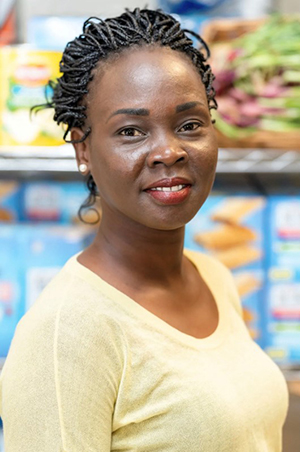
This small group is exactly that. All five women are newcomers to the United States. They arrived as refugees or immigrants, some more recently than others, but all are still balancing the stress of transitioning to a new culture. Our team member, Nyabuoy Chan, is helping each of them in that process by being a voice of strength and encouragement.
Amina is married with five children. Both she and her husband work outside the home to make ends meet. In South Sudan, where they are from, it is very uncommon for the mother to work outside the home. That transition alone has placed a lot of stress on the family. The balancing act of daycare and school for their five children is a rollercoaster every day.
Neither she nor her husband have reliable work schedules and their hours are always changing, which means routine and consistency isn’t available to the children. Even a slight disruption to their daily routine can be stressful. Two of the children are autistic and struggle with anything out of the ordinary, which happens often. Amina looks forward to this crochet circle as a peaceful place where she can relax and focus on something other than managing schedules.
Fatimah is a mother of seven and a grandmother of three. She provides for eight of them, including five of her children ages 25 to 7, and all three of her grandchildren ages 5 to 9 months. One of her sons got involved with a bad group in high school a couple of years after they arrived in Lincoln. Without knowledge of the local language and an understanding of American culture, Fatimah and her husband felt helpless trying to keep him from a bad crowd—a crowd they didn’t know anything about until it was too late. The son is serving a sentence right now, but will hopefully be out in a couple of years. He connected with a few good men and a visiting minister at the penitentiary and now goes to weekly services. Fatimah is very proud that her son is finding his way.
The three grandchildren Fatimah cares for belong to her oldest daughter, who is unable to care for them because she is in an abusive relationship. As I’ve written before, leaving an abusive relationship even when you know you should—and in some cases when your life depends on it—can still be hard. Fatimah prays every day for her daughter to find the strength to leave.
Nafisa arrived in Lincoln just a few months ago. She is eager to meet people and learn about her new community. She has a 2-year-old son and is expecting her second child in May. One of the unique things about the Sudanese community in Lincoln is how its members operate commercially. When we travel or move to a new country, there are certain things we miss and try to get when abroad, like food or clothing or English magazines. The same is true for the Sudanese community. Between Lincoln and Omaha, there are more than 10,000 Sudanese, and a handful of them own small businesses importing goods from back home. When when someone travels back to South Sudan to see family or for work, he or she brings back highly sought-after items to sell or give to others. It’s a comforting, reliable and charitable network. Nafisa is grateful for this because she is able to continue going to a local Sudanese tailor for dresses as her pregnancy continues.
Miriam is quiet and doesn’t share much. She and her husband have been trying to have children for nearly 10 years, and alternatives like adoption are uncommon in their culture. Miriam delights in helping her friends and neighbors care for their children and is even working on her license to offer in-home childcare, which can be quite the process, especially as a newcomer. The crochet and “changing the weather” conversations help to brighten her day as she is loved and embraced by the other women of the group.
Samiah is a single Sudanese mom of four and probably the most exhausted yet eager participant. Being a single parent who works full-time is a lot of work (I don’t know how she does it!). Yet every week, she shows up with a ton of energy, homemade food (as they all do) and chai (tea) for everyone. She leads the conversations and is always willing to contribute her thoughts, but at the same time, she listens, is respectful of others’ opinions, and is encouraging.
She made the decision to leave her husband and has had to endure a number of harsh judgements from other community members. It isn’t easy to raise children alone, and doing so when other people are judging you for it doesn’t make it any easier. Still, she respects those who disagreed with her decision and she moves on. Her children are excelling in school and that is what keeps her motivated. Samiah works tirelessly to provide for them and give them the opportunities she herself never had.
These five women represent, in brief, what it's like to be a newcomer. On top of the struggles we all have, there are many, many challenges when moving to a new country, including learning a new language, adapting to new customs, understanding how the educational system works, and the western novelty of managing the household while working outside the home, all of which can be added stress on a marriage and other familial relationships.
At CSS, we acknowledge that these women have left behind a strong network of family and friends, and we support them as they build new ones. Every week, our collaborative invites them to leave their stress at the door and step into an hour or two of peaceful conversations and friendship, a place and time for a changing of the weather.
St. Rafqa, patron saint of knitters, pray for us!
