By Katie Patrick
On Mother’s Day, we often picture flowers, breakfast in bed, handwritten cards, and perfectly behaved children. But for one mother in our community, the day begins—like most days—with quiet sacrifice and deep faith.
Maria, like many immigrant mothers, balances her own dreams with her children’s needs. Before the day starts and while her children are still asleep, Maria sits with her coffee at the kitchen table and opens her U.S. Citizenship workbook. It’s been more than 10 years since she and her children made the dangerous journey to the United States. Two of the children are too young to remember the trip, but Maria remembers it all—the fear, the uncertainty, and the early years of hardship.
Her husband was nearly killed by gangs in their home country, and disappeared not long after his life was threatened. Maria and her children came to the U.S. alone. She hasn’t seen her mother since the day she left, an emptiness that her own children will hopefully never know. They connect through FaceTime and WhatsApp, but the distance remains.
Maria was granted a work permit soon after arrival, alongside her asylum application. It took several years for the paperwork to be completed before she became eligible for a green card. After holding permanent residency for five years, she was finally eligible to become a U.S. citizen. That was three years ago.
But life happened—her children came first, and finding the time to complete her naturalization application always seemed just out of reach.
In the beginning, learning a new language was especially difficult for Maria, though her children picked it up quickly. Because of that, they often had to interpret for her at grocery stores or medical appointments. She hesitated to ask for their help and would often avoid the situation if she could, always treating asking for their help as a last resort—unwilling to burden them with adult responsibilities.
Transportation in those early years was also difficult. Maria and her children walked or relied on the city bus. Now they have a minivan, but a different struggle weighs on her: her children have begun facing bullying at school. They’re told they don’t belong and that they aren’t “from here.” Maria worries—not just about their grades—but about the deeper wounds these words might leave. Will this lead to anxiety? Depression? Loneliness? Isolation? These are the questions all mothers carry in their hearts.
It’s easy to get overwhelmed by the unkindness in the world. But Maria reminds herself that cruelty often comes from fear—and fear, from brokenness. She finds strength in her faith and offers it up to the Lord and our Blessed Mother.
For Maria at the kitchen table, 30 minutes have passed. The children are waking. She closes her book and whispers, “Well… maybe tonight.”
The day unfolds: school drop-offs, work, doctor appointments, dinner, laundry, bedtime routines. It isn’t until 9:30 p.m. that Maria sits again at the table, reopens her workbook, and begins reviewing:
“What is the supreme law of the land?” The Constitution.
“What stops one branch of government from becoming too powerful?” Checks and balances. Separation of powers.
“What is one responsibility that is only for United States citizens?”
“The Federalist Papers supported the passage of the Constitution. Name one of its writers.”
And the list goes on.
Her naturalization exam is Monday—the day after Mother’s Day. Having taken a 10-week citizenship class at the local community center, she receives a few texts from other students, wishing her good luck and offering prayers. One of them thoughtfully asks a few of the 100 questions, to which she replies confidently, and with a smile. It’s late and she needs her rest, too.
Maria’s children may never fully grasp what she gave up for them, but God sees it all. And in His eyes, her quiet courage is nothing short of a masterpiece.
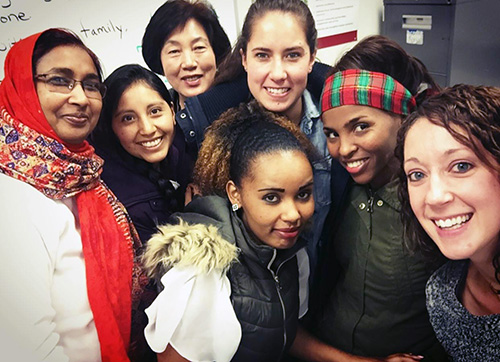
Author’s Note: Maria’s story is a collection of several women I’ve had the privilege to teach as a former citizenship instructor. Each mother and grandmother’s journey is unique, yet all reflect the same deep love and sacrifice. Immigration in the U.S. is often discussed in policy terms, but behind the headlines are human faces—which on the surface may appear tired and defeated, but look a little deeper and you’ll find joy, laughter, and resilience—all the things mothers are made of.