

By Katie Patrick
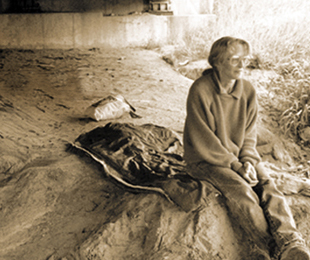
As the wind howls outside my home late in the evening, I can’t help but think of those less fortunate living on the streets, managing piles of dirty, damp blankets and coats weathered by previous nights’ storms and loaded onto push carts with shabby wheels that squeak as they are pushed. The backpacks they wear are weathered too, yet they hold the only belongings they have.
On any given night in the city of Lincoln, more than 50 individuals are sleeping on the streets, near benches or under bridges. Capacity is often reached at the People’s City Mission, particularly on cold nights, with some guests sleeping on cots in hallways and community rooms—though they will never turn anyone away. The 50 or so individuals not staying at the mission do so for a variety of reasons; typically, it is a choice influenced by past or current drug use, a refusal to abide by the mission’s rules, or a preference for self-reliance. Regardless, people are sleeping alone and cold on the streets.
In our rural communities, there may not be the same level of homelessness, but it nonetheless occurs—a few months ago I wrote a column about a time when our team in Imperial/McCook encountered a gentleman living in his car and helped him secure affordable housing and basic necessities. In small towns across the Diocese of Lincoln, families live in homes and apartments with limited heat and electricity. Whether due to late or missed payments, or self-directed practices of minimizing heat or electricity to avoid high energy bills and subsequent late payments, families—especially the elderly living on limited incomes, immigrants, or single-parent households—are also spending nights in the cold.
When I have conversations with those living on the streets, or those struggling to make ends meet, one constant in their stories is broken relationships. I hear about failed marriages, often resulting from abuse and neglect—recognizing that at CSS, like Christ, we encounter and love both the victim and the abuser. I also hear stories of young people who left homes marked by distance, neglect, and oftentimes a lack of love—though in some cases, they left behind tough-loving parents who desired more for their children than the drugs and circles of friends they chose.
When relationships are broken, what often follows are negative coping mechanisms, including substance abuse, emotional avoidance, and self-destructive, dangerous, or risky behavior. These actions can lead to criminal behavior and incarceration.
After incarceration, one may be free, but a criminal record does not disappear. Its consequences can include unemployment, as finding a job with a criminal record can be difficult, though not impossible. Frustration builds, and over time—if positive familial relationships are not restored—the cycle continues. This underscores the importance of strong, healthy relationships, particularly within the family unit. All the well-intentioned policies and funding streams in the world cannot replace the unconditional love of a family. That is what we—you and me, CSS—need to focus on, work toward, and pray for.
CSS is present for those who, for one reason or another, no longer have the security and warmth of a family unit surrounding them. We are present for those who were abandoned—or those who abandoned. Our team shines best when we find ourselves caught up in a 20-minute conversation with a single client that may only result in the distribution of one pair of socks, but in those 20 minutes, we shared the love of Jesus with the person in front of us. We hope that encounter can be nurtured over time—bringing that person to Jesus and, if possible, onto a path toward mending lost or damaged relationships.
 This journey can be long and is unique to each person, which is why CSS continues to rely on your financial support and prayers so that we can have these conversations—conversations prompted and guided by the Holy Spirit. Together, we provide material assistance and opportunities for clients to pursue lives of safety, prosperity and hope.
Pray for Kristin. When I saw her last Friday afternoon at our thrift store, she and her husband were taping their blankets together on a push cart, preparing for the cold night ahead. In previous encounters with me, she shared memories of her childhood and spoke of a grandson she hopes to one day see again. But in that moment, while warm inside CSS, her expression was filled with sadness and an overwhelming sense of despair. CSS will continue to meet her where she is. We will provide food, blankets, and personal care items—but most of all, we will continue to share the love of Christ with her.
