

By Katie Patrick
Two weeks ago, I shared the story of a young woman who was living in an unsafe situation. Her mom reached out to me on Christmas Eve begging for local resources that could help her daughter. The parents lived in another state, and with a little more information, I gathered that the daughter was a drug user and the parents forbade drug use in the home.
While there may have been other reasons that the daughter chose to live in a city a thousand miles away, the reality of her being so far from her family—her natural safety net—caused deep physical and emotional distress. In other words, due to distance and previously severed relationships, the crisis displaced the family as the primary responder. When this happens, neighbors and the local community become the next line of support—followed by organizations.
This is because neighbors and the local community are in close proximity, able to respond quickly, and invested in the dignity and long-term well-being of those around them. We’ve seen this firsthand across the diocese in recent months. The Hastings community mobilized quickly when SNAP benefits were delayed to more than 2,500 people in Adams County by hosting soup suppers every night of the week until benefits were restored. Then, last month, when Nebraska experienced the worst wildfires in state history, neighbors with the capacity to assist, immediately jumped in by taking in cattle, trucking in hay bales, and fighting fires.
But what happens when the poor and vulnerable are not surrounded by family, neighbors, or a local community?
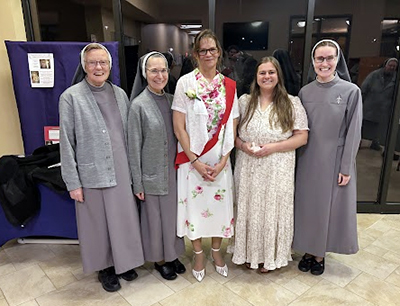
Almost two years ago, a woman fleeing domestic violence and abusive control moved into our St. Gianna Home in Lincoln. Her name was Kellie. Sr. Karen was her advocate and our CSS Outreach Coordinator Alexis Brouillette got to know Kellie through the Bible studies that she offered for the residents. Over time, Kellie was able to address the pain and trauma that she carried for so many years, and she finally moved toward building new friendships and most importantly, toward restoration.
Through the encounters she had with CSS staff and volunteers, Kellie received our time, our compassion, our guidance, and most importantly, our love—and through that Kellie found her way home. On Saturday, April 4, at the Easter Vigil, Kellie was received into full communion with the Catholic Church. Our efforts at CSS truly don’t get any better than that! Praise God!
At our recent Celebration of Hope Gala, the theme was simple: ‘You Are Not Alone.’ Through our video that evening—which included Kellie—and in the testimonies of Dan Stara, first-year seminarian at St. Gregory the Great Seminary in Seward, and Johnny Ray, our keynote speaker, this message was clearly echoed. Yet there is an important truth we cannot ignore.
While organizations like CSS can step in when family, neighbors, and community are absent, lasting restoration requires more than assistance alone. As Ismael Hernandez, author of “Rethinking Charity: Restoring Dignity to Poverty Relief” reminds us, true dignity is restored only when a person takes ownership of their past and responsibility for their future.
At Catholic Social Services, we are called not simply to provide services, but to encounter, accompany, and walk alongside each person in their time of greatest need—just as Christ calls us to do.
Journey with us as we pray and respond to that call through the Works of Mercy. But first, take care of your family, look out for your neighbors, and invest in your local community—because those are the places where no one should ever have to feel alone—and when they are, we must be ready to step in.
