By Reagan Scott
(SNR) - Following the completion of the diocese’s annual audit, the finance office for the Diocese of Lincoln has released the financial report for fiscal year 2018-2019.
Tracy Lockwood, chief financial officer for the diocese, said the report is released each year to provide transparency and accountability to the diocese’s donors.
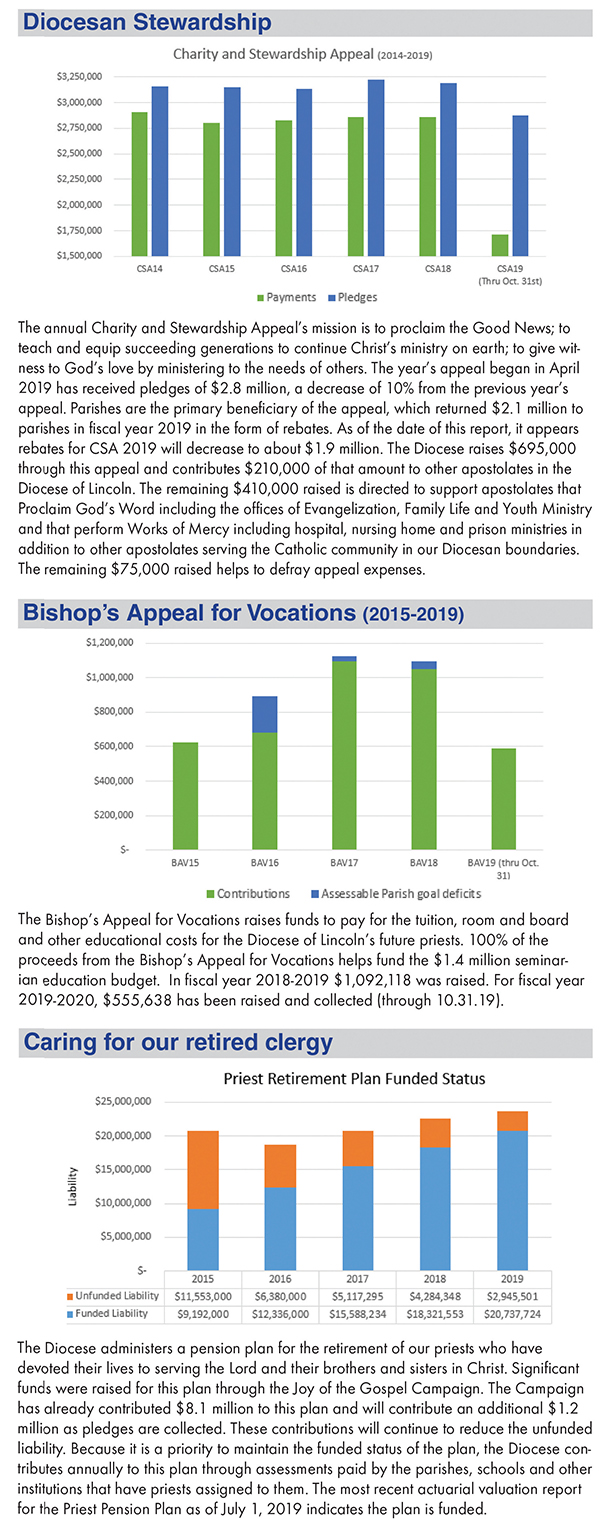
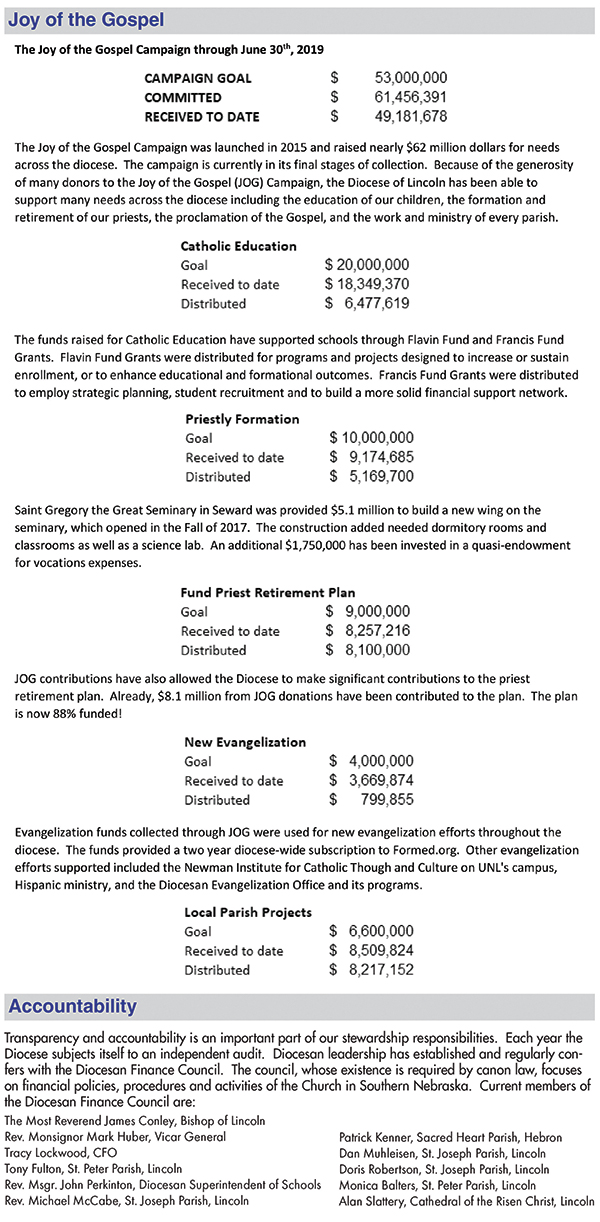
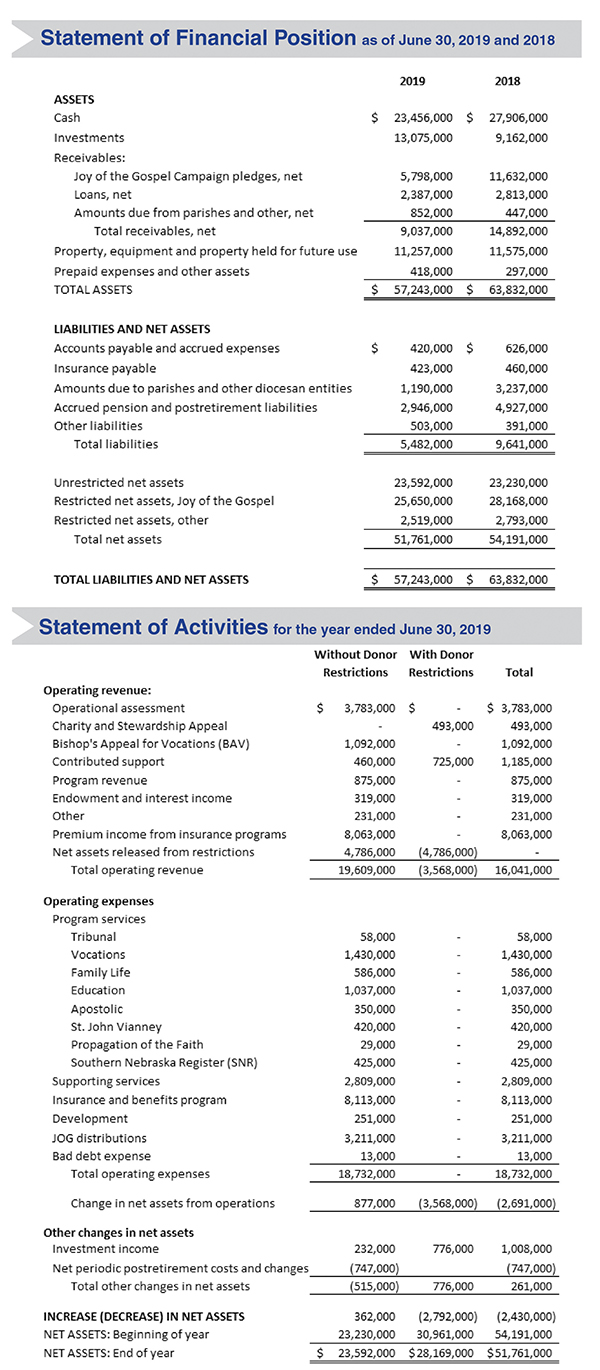
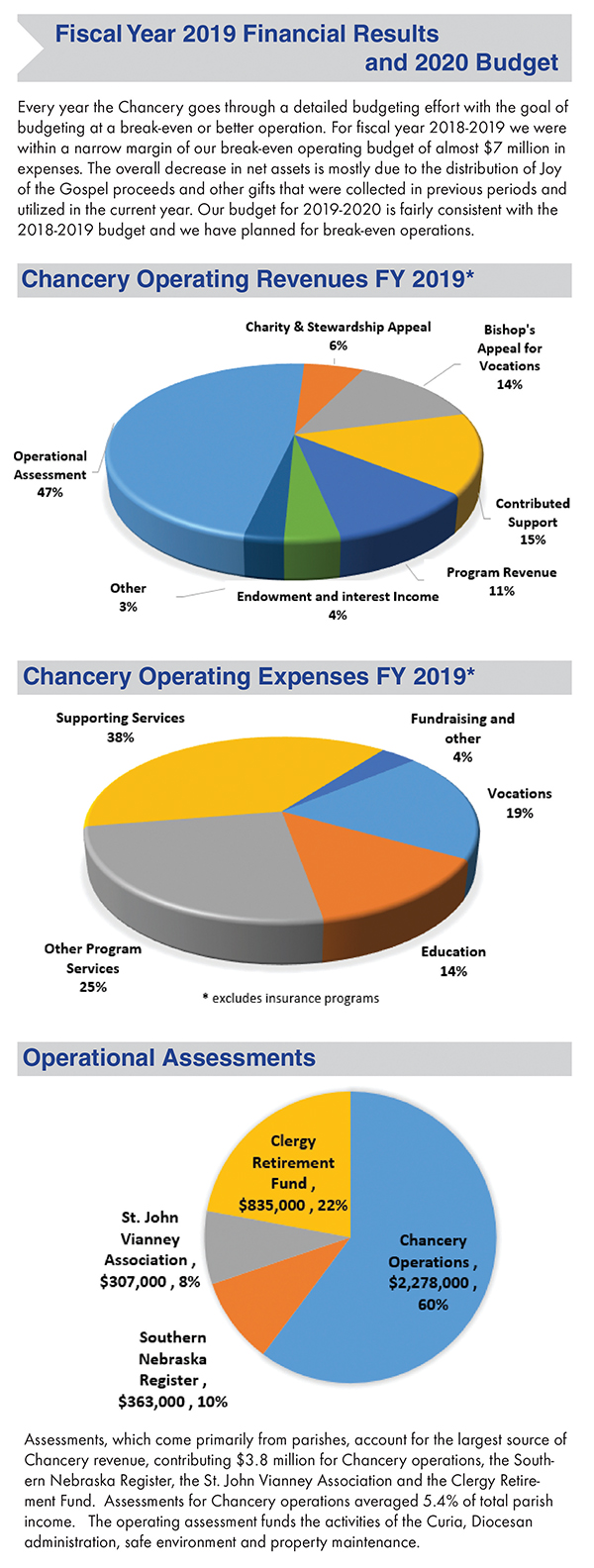
The finance report outlines the overall financial position of the diocese and the sources and uses of diocesan funds. In it, readers can find such information as how much money the diocese has received from its annual appeals and how much was spent on diocesan operations.
Since the report contains only the activities of the Chancery of the diocese, it does not include the activities of parishes and schools.
“We’re trying to provide Catholics with an understanding of how the diocese uses the money we received and show good stewardship of the gifts God has given us,” Lockwood said.
This report is just one of the finance office’s responsibilities.
“The finance office of the Catholic Chancery is responsible for the development, coordination, and administration of the diocesan accounting and financial activities,” she explained.
Lockwood also said the finance office serves parishes and schools in the financial administration of their health, retirement and property insurance programs.
“We have almost 2,000 employees in the diocese and a lot of buildings,” she said.
They also work with Bishop James Conley and the departments of the Chancery to set the diocese’s annual operating budget, and work to monitor the budget throughout the year.
Finally, Lockwood said, in addition to the financial and accounting services for the Chancery, the finance office processes the day-to-day financial transactions and accounting for the Lincoln Diocesan Investment and Loan Trust, the St. John Vianney Association, the Society for the Propagation of the Faith and the Southern Nebraska Register.
A graduate of the University of Nebraska-Lincoln, Lockwood spent almost 10 years in public accounting before working four years as the controller at the Archdiocese of Indianapolis. She and her husband moved back to Lincoln at the end of 2015, around the time when the Lincoln Diocese was in need of a controller.
Lockwood worked as the controller for the Lincoln Diocese for eight months and became the CFO for the diocese in November 2016. She advises on diocesan decisions with financial implications, is a member of the Diocesan Finance council and oversees the Audit and Accounting Committee, a subcommittee of the Finance Council.
Lockwood said she enjoys being a witness to the good work of the Catholic Church in Nebraska and the people of the diocese.
She said, “I enjoy working with such good people doing the work of Christ, whether in administrative jobs or ministerial.”
Glossary of Terms
Amounts due to parishes and other diocesan entities: These are primarily rebates from Joy of the Gospel and Charity and Stewardship Appeal that are payable to parishes.
Apostolic: Provides services including but not limited to Hispanic ministry, pro-life programs, hospital and nursing home ministries, prison chaplaincy, etc.
Contributed Support: Includes unrestricted and restricted donations to CBL from generous benefactors.
Development: Expenses related to managing diocesan appeals and campaign including the Joy of the Gospel and Charity and Stewardship Appeal.
Education: Expenses of the Diocesan Catholic Education office including the Education Technology initiative which collectively support the Catholic elementary and high schools of the diocese
Family Life: Includes ministries for family life, youth ministry, religious education and catechesis and evangelization which administer youth events, pilgrimages, retreats for young people, families and engaged couples, Natural Family Planning, support for parish programs of evangelization and formation.
Insurance and benefits program: The Diocese administers the health care insurance plan and property and liability insurance program for all Diocesan employees, parishes, schools and related ecclesiastical entities. The expense line represents premium, claim and other expenses related to these shared service plans.
Joy of the Gospel restricted net assets: Assets and liabilities of the Diocese of Lincoln reflect the significant pledges and contributions made to the Joy of the Gospel campaign (JOG).
Loans, Net: Loans issued by the Chancery to parishes or schools. These loans are from the Chancery directly and not from the Lincoln Diocesan Investment and Loan Trust.
Operational Assessment: Annual contribution from parish collections to the centralized ministries and services of the diocese, St. John Vianney Association for priest retirement and the SNR.
Program revenue: Funds received in fees for programs, retreats, etc.
Program services: Direct and Indirect costs related to providing the ministry related programs and services.
Propagation of the Faith: “Missions” office for bringing the Catholic faith to people around the world.
St. John Vianney: Retirement, medical and other assistance for the care of our priests.
SNR: The diocesan newspaper mailed to all homes in the diocese; the Southern Nebraska Register also assists with broader communications such as social media, video production and the diocesan website.
Supporting Services: Operational support and maintenance, upkeep and depreciation for diocesan properties including homes for Bishop James Conley and Bishop Fabian Bruskewitz, salaries and health insurance of priests and laity serving in administrative and ministry leadership, diocesan support for the Nebraska Catholic Conference and USCCB, and legal and accounting fees.
Tribunal: The tribunal deals with issues of canon law, primarily marriage cases.
Vocations: Funds the education of seminarians, and provides opportunities for discernment to priesthood and religious life.