

Q. The Catechism of the Catholic Church says that sacraments “bear fruit in those who receive them with the required dispositions.” Would you please explain these required dispositions?
A. Sure thing. A great question. Please let me give you just a little background and history on the Catechism of the Catholic Church (CCC).
First printed in 1992, the Catechism of the Catholic Church was the first comprehensive updating of the Catholic Church’s universal catechism in 426 years. The last catechism was printed in 1566 after the Council of Trent. The CCC was one of the fruits of the Second Vatican Council, 1962-1965.
A catechism is a text which contains the fundamental Catholic truths in the areas of faith and morals in a way that people can understand. The Catechism is arranged in four principal parts:
1. The Profession of Faith (the Apostle’s Creed)
2. The Celebration of the Christian Mystery (the Sacred Liturgy, and especially the sacraments)
3. Life in Christ (including the Ten Commandments)
4. Christian Prayer (including the Lord’s Prayer)
This scheme is often referred to as the “Four Pillars” of the Faith.
The Catechism consists of 2,865 paragraphs, each of which is numbered. There is an internal cross-referencing system among the paragraphs which makes it simple to find all the passages in the Catechism which treat a particular subject.
In addition, the Catechism provides several indices for ease in locating particular passages. Indices are organized according to themes, Scriptural citations, symbols of the faith, documents of ecumenical councils, documents of other councils and synods, pontifical documents, ecclesiastical documents, canon law, liturgical texts and ecclesiastical authors.
I suggest the Catechism of the Catholic Church as a great gift idea for people wanting to deepen their knowledge of their faith.
Now to your question. The paragraph in the Catechism that you quote is as follows:
1131 The sacraments are efficacious signs of grace, instituted by Christ and entrusted to the Church, by which divine life is dispensed to us. The visible rites by which the sacraments are celebrated signify and make present the graces proper to each sacrament. They bear fruit in those who receive them with the required dispositions.
The Catechism does a very good job of explaining grace in paragraphs 1987 – 2011.
Basically, grace is a participation in the life of God. As such, grace is a gift, a free and undeserved help that God gives us to respond to His call to become children of God, adoptive sons and daughters, partakers of the divine nature and of eternal life. We receive sanctifying grace (God’s divine life) in the sacraments which in our Catholic tradition we know are seven in number. Three belong to what we call sacraments of initiation: Baptism, Eucharist and Confirmation; two are sacraments of healing: Penance and Anointing of the Sick and two are sacraments of service: Marriage and Holy Orders.
The sacraments always give grace, if we receive them with the right dispositions.
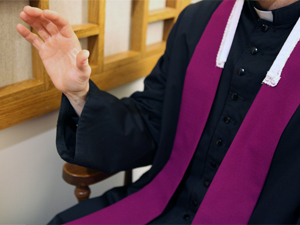 You ask: What do we mean by the “right dispositions” for the reception of the Sacraments? By right dispositions we mean the proper motives and intentions and the fulfillment of all the conditions required by God and the Church for the worthy reception of the sacraments. That is, we ask for the sacraments for the right reason – to help us become more Christ-like so that we can live in such a manner that we will be happy with Him forever in heaven.
For example, the right dispositions for Penance are:
1.) To confess all our mortal sins as we know them
2.) Be sorry for them
3.) To determine never to commit them or others again.
The right dispositions for the Holy Eucharist are:
1.) To know what the Holy Eucharist is
2.) To be in a state of grace, (free of all mortal sin)
3.) Except in special cases such as sickness – to fast one hour before receiving Holy Communion.
Author’s note: Information for part of this answer was taken from the United States Catholic Conference of Bishop’s web site.
This question was answered by a priest of the Diocese of Lincoln. Write to Ask the Register using our online form, or write to 3700 Sheridan Blvd., Suite 10, Lincoln NE 68506-6100. All questions are subject to editing. Editors decide which questions to publish. Personal questions cannot be answered. People with such questions are urged to take them to their nearest Catholic priest.
