

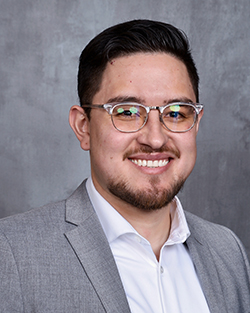
By Ricardo Izquierdo, director of the Office of Hispanic Ministry
Humans form tribes naturally, and community is essential to both our physical survival and emotional health. Even the Desert Fathers, as hermits, belonged to the communion of the saints, finding union with other people in their mutual relationship with God. We form tribes all the time based on commonalities, like sports, hobbies, hometowns or nations. That’s a great thing. Taking pride in and sharing of ourselves is part of being human.
However, the enemy is able to twist anything. It is not rare for a tribe to take the place of God in people’s hearts and be a motive for disordered division. The temptation for secular and political organizations who identify themselves with a particular ethnicity is to fail to see their members as more than helpless, oppressed people, ignoring their inherent human dignity and gifts. This mindset often leads to following erroneous ideologies that promise some kind of utopia through emotion-driven policy, ultimately ignoring the real source of our salvation.
 The Office of Hispanic Ministry is not about identity politics or creating some sort of ecclesial welfare system because our Hispanic Catholics are helpless. Rather, “Hispanic” in this case is simply a word used to identify a group of Catholics with specific characteristics, gifts, and needs in the Church, much like how The Office of Youth Ministry focuses on our young people.
My job becomes then, sure, advocating for Hispanics, but more because they are Catholic than because they are Hispanic. Hispanics just happen to be the largest group of recent immigrants who share our common bond in the faith, and that bond is worth holding onto and nurturing. Unfortunately, when the American faithful have failed to connect with newcomer Catholics, other groups and sects have led our people away from the Church and Her Truth in a new and confusing society.
St. Augustine wrote, “since you cannot do good to all, you are to pay special regard to those who, by the accidents of time, or place, or circumstance, are brought into closer connection with you” (De Doctr. Christ. i, 28). I believe this applies particularly to immigrants within our diocese who also share our brotherhood under Christ, from any nation. This filial union as children of the same Father also recalls the virtue of piety, a subset of justice by which we give what is owed to our parents and to our brethren, including our fellow citizens (St. Thomas Aquinas, Summa Theo., Sec. Pars, Q. 101). How much more does this virtue apply when we talk about those who share the name of Christian and live so near to us.
The beauty of this situation is that, as the saying goes, members of every ethnicity can learn from each other within the Church and together contribute to Her mission.
Latin America has a different relationship with Catholicism than the United States — most of the countries where our Hispanic brothers and sisters came from were founded by Catholics, and received Western European culture and faith that superseded all native worship, turning from adoration of nature to that of the true God. That has survived for centuries, and many of our Hispanics from those countries bring a zeal for the faith with them in their blood. This devotion is a valuable asset in the Church in the United States.
Of course, there are many things that immigrants can and should learn from the customs and culture of the United States. I think of how much more organized things are here than in Colombia, my country of origin, both in secular and religious life, especially in the Lincoln Diocese. I also think of the great fervor and orthodoxy I have experienced here. Every diocese in the world has problems, but I have personally received everything from Lincoln: sacramental formation, Catholic education (both in high school and seminary), the circumstances by which I met my wife, and now a job that gives me great purpose.
I’m nobody special, but I have received a great filial love for our local Church. I see her as a Mother, and I want all Hispanics to experience that. When that takes root in someone’s heart, it shows that the Church that Jesus Christ founded is his or her preeminent tribe, Hispanic or not. I am honored to be part of that work within our diocese.
¿A qué tribu perteneces?
Los seres humanos forman tribus naturalmente, y la comunidad es esencial tanto para nuestra supervivencia física como para la salud emocional. Incluso los Padres del Desierto, como ermitaños, pertenecían a la comunión de los santos, encontrando unión con otras personas en su relación mutua con Dios. Formamos tribus todo el tiempo basadas en cosas comunes, como deportes, pasatiempos, ciudades o naciones. Eso es algo buenísimo. Estar orgulloso y compartir de nosotros mismos es parte de ser humanos.
Sin embargo, el enemigo es capaz de torcer cualquier cosa. No es raro que una tribu ocupe el lugar de Dios en los corazones de personas y sea un motivo de división desordenada. La tentación para las organizaciones seculares y políticas que se identifican con una raza en particular es no ver a sus miembros como algo mas que personas indefensas y oprimidas, ignorando su dignidad humana y sus dones inherentes. Esta mentalidad a menudo conduce a seguir ideologías erróneas que prometen algún tipo de paraíso a través de una política impulsada por emociones, ignorando en última instancia la verdadera fuente de nuestra salvación.
La Oficina del Ministerio Hispano no se trata de políticas de identidad o la creación de algún tipo de estado benefactor eclesial porque nuestros católicos hispanos son indefensos. Más bien, “hispano” en este caso es simplemente una palabra usada para identificar a un grupo de católicos con características, dones y necesidades específicas en la Iglesia, muy parecido a como la Oficina de Ministerio Juvenil se enfoca en nuestros jóvenes.
Mi trabajo se convierte entonces, claro, en abogar por los hispanos, pero más porque son católicos que porque son hispanos. Los hispanos son el grupo más grande de inmigrantes recientes que comparten nuestro vínculo común en la fe, y vale la pena mantener y alimentar ese vínculo. Desafortunadamente, cuando los fieles americanos no se han conectado con los católicos recién llegados, otros grupos y sectas han alejado a nuestra gente de la Iglesia y de Su Verdad al llegar a una nueva y confusa sociedad.
San Agustín escribió, “ya que no podéis hacer el bien a todos, debéis prestar especial atención a aquellos que, por los accidentes de tiempo, o lugar, o circunstancia, son llevados a una conexión más cercana con vosotros” (De Doctr. Christ. i, 28). Creo que esto se aplica particularmente a los inmigrantes de nuestra diócesis que también comparten nuestra hermandad bajo Cristo, de cualquier nación. Esta unión filial como hijos del mismo Padre recuerda también la virtud de la piedad, un subconjunto de la justicia por el cual damos lo que se debe a nuestros padres y a nuestros hermanos, incluyendo a nuestros conciudadanos (Santo Tomás de Aquino, Summa Theo., Sec. Pars, Q. 101). Cuanto más se debe aplicar esta virtud cuando hablamos de aquellos que comparten el nombre de cristianos y viven tan cerca de nosotros.
La belleza de esta situación es que, como dice el refrán, los miembros de cada raza pueden aprender unos de otros dentro de la Iglesia y juntos contribuir a su misión.
América Latina tiene una relación diferente con el catolicismo que los Estados Unidos - la mayoría de los países de donde nuestros hermanos y hermanas hispanos vinieron fueron fundados por católicos, y recibieron la cultura y la fe de Europa Occidental que superó todo el culto nativo, pasando de la adoración de la naturaleza a la del verdadero Dios. Eso ha sobrevivido durante siglos, y muchos de nuestros hispanos de esos países traen un celo por la fe en su sangre. Esta devoción es un elemento valioso en la Iglesia de los Estados Unidos.
Por supuesto, hay muchas cosas que los inmigrantes pueden y deben aprender de las costumbres y la cultura de los Estados Unidos. Pienso en lo mucho más organizadas que son las cosas aquí que en Colombia, mi país de origen, tanto en la vida secular como en la religiosa, especialmente en la diócesis de Lincoln. También pienso en el gran fervor y fidelidad a la tradición de la fe que he experimentado aquí. Todas las diócesis del mundo tienen problemas, pero yo personalmente he recibido todo de Lincoln: la formación sacramental, la educación católica (tanto en la preparatoria como en el seminario), las circunstancias por las que conocí a mi esposa, y ahora un trabajo que me da un gran propósito.
No soy nadie especial, pero he recibido un gran amor filial por nuestra Iglesia local. La veo como una madre, y quiero que todos los hispanos experimenten lo mismo. Cuando eso se arraiga en el corazón de alguien, muestra que la Iglesia que Jesucristo fundó es su tribu principal, así sea hispano o no. Me siento honrado de ser parte de ese trabajo dentro de nuestra diócesis.
