

Q. What is the difference between the Catholic Church and the/a Christian church? Or the difference between the Christian and Catholic faith? I ask because a granddaughter is getting married in a Christian church.
A. An intriguing question, thank you for asking it. I will have to make some assumptions in answering your question.
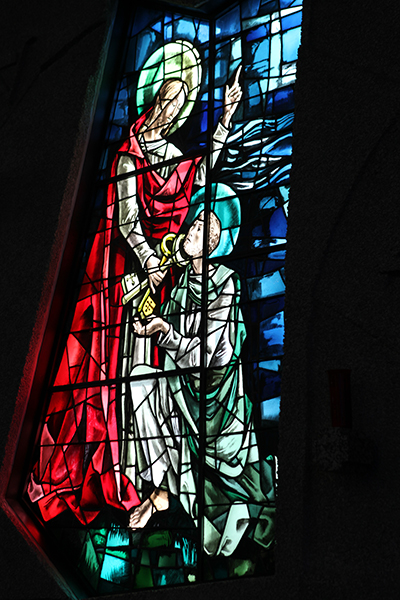 Jesus Christ, the Son of God, established His Catholic Church as the one true Church. Matthew 16:18-19, Mark 3:14-15, Matthew 28:18-20 and Acts 2:14, 36-42 are among the many scriptural references to the Catholic Church being the one true Church in the world.
That Jesus intended that there be one Church was true until the middle of the 16th century when the Protestant Reformation occurred. At that time, abuses in the history of the Catholic Church, real and imagined, and errors of Protestant reformers caused a schism in the unity of the Catholic Church and split Christianity. In the next several centuries, new man-made churches/religions such as the Lutheran, Presbyterian, Episcopalian, Methodist, Baptist and many other religions were created.
People who comment on these matters often call these religions ‘separated brethren’ because these religions share in elements that are common to the Catholic religion, for example, much of the Bible, apostolic teaching, moral teaching, etc. Thus, I am presuming that these Protestant churches are what you mean by “Christian.” Quite often I have people say to me “I am not Catholic, I am Christian.” I do not know what they mean by that, but Catholics are Christians, the first Christians.
However, these non-Catholic religions (and I believe one can synonymously call them faiths) continue to divide among themselves and proliferate in their errors. There also continues to be many recent, upstart, storefront churches that really are not part of the Protestant tradition. Many of these “churches” center on the personality of the pastor and have little in common with traditional Christianity. Catholics who attend other Christian churches seriously risk their souls in pursuing error and false teachings.
I also presume that your granddaughter is Catholic? If so, she has an obligation to be married in a Catholic Church, with the priest being the one receiving their vows, and at least two other witnesses.
The Catholic Church also has a beautiful and rich marriage preparation process that Catholics are required to take. If your granddaughter is Catholic and is being married in a non-Catholic church, then her marriage would be sacramentally invalid, which would mean that she would not, as a Catholic, be able to receive the sacraments in the Catholic Church.
If these assumptions are correct, I strongly encourage you to have her talk to her Catholic pastor or the nearest Catholic priest. Thank you for your question.
This question was answered by a priest of the Diocese of Lincoln. Write to Ask the Register using our online form, or write to 3700 Sheridan Blvd., Suite 10, Lincoln NE 68506-6100. All questions are subject to editing. Editors decide which questions to publish. Personal questions cannot be answered. People with such questions are urged to take them to their nearest Catholic priest.
