

Q. How could I gently explain to a loved one how other churches changed the Bible?
Editor’s Note: The Register posed this question to Dr. Vern Steiner, president of The Emmaus Institute for Biblical Studies in Lincoln.
A. Thank you for asking this important question. There are two ways in which Catholics believe that other churches have changed the Bible: by altering its contents (which books it contains) and by adjusting its meaning (how it is understood).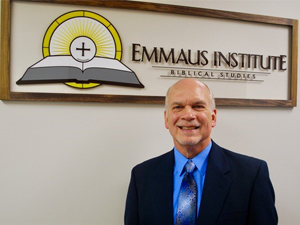
On the former, let me suggest that you begin by highlighting what we hold in common. All Christians agree on the vast majority of the books that make up the Bible, including all 27 New Testament books and all but seven of the Old Testament books (plus a few “additions” to several others which do not appear in Protestant versions of these books). This in itself should enable us to explore together the incredibly wonderful revelation of our God, centered in the Gospel of our Lord Jesus Christ.
From there, I would proceed to explain that, since no passage in the Bible provides an inspired “Table of Contents” or definitive list of which books belong there, Protestants and Catholics alike have to depend on other kinds of evidence. Whether Catholics added a handful of books to the Bible or Protestants deleted some books from the Bible depends on how one reads the available data, and with what presuppositions.
On both biblical and historical grounds, Catholics believe that the Old Testament read by Jesus, the apostles, and the early Church included the “seven.” We base this conclusion on the many citations or allusions to these books in the New Testament, and on the consistent testimony of early and medieval councils, documents, and liturgical use. We acknowledge that these books were not included among those eventually selected by Pharisaic Judaism in the early centuries of the Christian era; but we believe that the Church, in submission to her Lord, should look to the authority of Jesus and his authorized and Spirit-guided apostles and their accredited successors rather than to the leaders of a prominent, anti-Christian Jewish sect to decide such matters. After all, if the Jews of Jesus’ day got the Messiah wrong, why should they be trusted to have gotten the Bible right? In other words, while ancient rabbis played a crucial role in defining the limits of the canon for Judaism, that does not mean we are beholden to their authority in deciding such matters for the Church. On that principle there would be no New Testament at all!
It is telling that the first real challenge to the Church’s inclusion of the “seven” came in the 16th century, in connection with the Protestant Reformation. For the first 1,500 years of the Church’s existence, these books were never excluded from the Christian Bible in any official Church teaching. Ironically, the Council of Trent’s formal declaration in the aftermath of the Reformation reflects an attempt to preserve the fuller canon of the early Church, as it was in the days of Jesus and the apostles, whereas Luther and the other Reformers, although professing a commitment to primitive Christianity, actually settled for a narrower Jewish canon that was in fact the product of rabbinic and Pharisaic reaction against the Church.
I am not unaware that Protestant scholars propose alternate ways of reading the data. The real point at issue, in this and in many matters, becomes then the presuppositions which influence our respective viewpoints. In a loving way, you might ask your friend: What is there about the information I have presented that you find problematic, and why do you think that is the case? This can begin a fruitful and mutually edifying discussion.
The second way in which Catholics believe that Protestants have changed the Bible centers on how the Bible is read and understood. At issue here is not the authority of the Bible per se, nor even our relative commitments to the Bible as God’s Holy Word, but the question of who decides what the Bible says and by what principled criteria. Specifically, does final interpretive authority rest with the individual as the arbiter of truth or with the Church and its consistent witness, reaching back to the apostles, as the final arbiter of truth? Catholics observe how the radical shift toward private judgment that accompanied the Protestant movement effected a fundamental change—both in the material contents of the Bible (as noted above), and equally serious in how the Bible’s teachings about many topics (e.g., the Eucharist, the doctrine of justification) were adjusted in order to accommodate a departure from the “one holy catholic and apostolic Church” and its inherited understanding of the Bible up to that time.
Here, too, I would try to engage your loved one in a charitable conversation that engages the question: Assuming that not all the conflicting views on this or that topic are equally biblical, who, in your understanding, is authorized to decide what the Bible means, and from where does that authorization come? The Protestant response to this question will account for most of what Catholics perceive to be “changes to the Bible” reflected in non-Catholic interpretation.
God bless you as you try to have a conversation with your loved one about these important matters.
The Institute will begin its second year of operation in September. For information on in-person and online courses and seminars, and for a related discussion on some of the points mentioned above, visit www.emausinstitute.net and click on the Courses and Library tabs.
Write to Ask the Register using our online form, or write to 3700 Sheridan Blvd., Suite 10, Lincoln NE 68506-6100. All questions are subject to editing. Editors decide which questions to publish. Personal questions cannot be answered. People with such questions are urged to take them to their nearest Catholic priest.
