

Story by Randy Porter
LINCOLN (SNR) - A course offered by The Newman Institute for Catholic Thought and Culture helps FarmHouse Fraternity pledges at the University of Nebraska-Lincoln live more virtuous lives.
“The lectures help me make decisions in everyday life,” said Nathan Anderson of Hastings. “Because of these talks, I have started to think about the virtues before I make decisions.”
Anderson’s comments typify those of various others in the class, Called to Greatness: Seven Roads to Excellence. He majors in mechanized systems management, an agricultural major under the College of Agricultural Sciences and Natural Resources.
FarmHouse pledges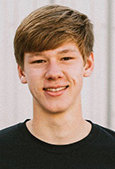 Anderson is one of 27 FarmHouse pledges who studied the classes in a pilot seminar in conjunction with UNL’s Engler Agribusiness Entrepreneurship Program. The Engler Program’s instruction in purpose-driven entrepreneurship helps students develop a classical understanding of virtue, and the means to apply that virtue to their lives.
“Your direction in life is dictated by small decisions,” Anderson said. “So, by thinking about the virtues before making a decision, the lectures will ultimately direct the course of my life.”
The freshman most enjoyed the two lectures in each class, he said. He liked listening to two distinguished professors talk about virtues and how they relate to a person’s life.
The course was taught by Dr. Tom Field, director of the Engler program, and Dr. John Freeh, who became the Newman Institute’s first director in 2017. Freeh presented the institute’s teaching about virtues from the Great Books – the best that has been thought and written. Field presented how to apply virtue in entrepreneurship, commerce and everyday life.
Having two lectures, then discussing them in a classroom setting was great, Anderson said. Having various people’s opinions in the discussions led to new perspectives.
He enjoyed listening to the two presentations, he said. The first presentation was more about defining the virtues and looking at historical examples, and the second presentation was how virtue relates to current life.
“I believe this course should become an every year thing at FarmHouse,” Anderson said. “I have truly benefited from it and my fellow pledge class has as well. In my opinion, this would be beneficial for every fraternity.”
Freeh said the new course was the brainchild of FarmHouse alumnus Andrew Minarick, of Lincoln.
Minarick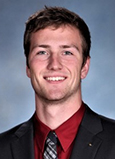 Andrew Minarick had taken classes with both the Newman Institute and Engler Program. Both professors in the programs had a big impact on his education and my life.
“I thought how I would have benefited from those classes earlier in my college years,” Minarick said. “So, I set up a meeting between Dr. Field, Dr. Freeh and some FarmHouse executive members to talk about potential collaboration. “They ran with the new course from there.”
From North Bend, Neb., Minarick graduated in 2018 with a bachelor of science in biological systems engineering.
He said FarmHouse takes pride in its reputation for building well-rounded, virtuous men. There is always room for improvement, and as a freshman, he could have benefited from more direction and advice from virtuous men such as Drs. Field and Freeh.
“This class on virtues can help give these freshmen an early roadmap of the good, beautiful and true,” Minarick said. “Virtues are the root of any great organization. Consequently, Drs. Field and Freeh were confident that a class on virtues would prove the most beneficial.”
Both taught subjects and ideas that can be currently overlooked by many professors or colleges, he said. They focused on development as a person first. Unfortunately, that’s something on which few college courses focus.
Freeh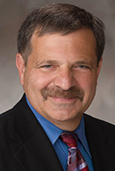 Some fraternities require a course of self-improvement for pledges or others, said Freeh.
The eight-class seminar, due to a COVID-shortened semester, met most Mondays at 7 p.m. in the FarmHouse classroom. While the pledges attended regularly, other fraternity members periodically joined the class because they found it interesting.
“It was great to work with FarmHouse Fraternity, the pledges and Dr. Field,” Freeh said.
The seminar examined seven key virtues and showed how they form the foundation for greatness while shaping the course of one’s life in key areas such as study, work, relationships, health and happiness. The virtues studied include Humility, Temperance, Courage, Justice, Honesty, Generosity and Wisdom.
“Virtue is not only an ideal, it is an essential building block for any successful organization,” said Freeh, who taught literature and philosophy at Hillsdale College, Wyoming Catholic College and Gonzaga University. He also holds a doctorate in English literature from Oxford University, and master’s degrees from Northwestern and Georgetown.
“Entrepreneurship is always intentional and purposeful,” the Lincoln resident said. “It demands hard work, diligence and devotion to duty.”
The seminar could be considered an invitation to be a better man, Freeh said. It seems appropriate considering the fraternity refers to itself as “Builder of Men.”
For millennia, wise observers have believed the practice of virtues leads to a more meaningful and productive life, he said. The whole purpose of education was to develop these virtues. It’s only in more recent decades that college has focused on career development, not development of the whole person, mind, heart and soul.
Virtue is a habit of life which inclines one to act in a certain way, Freeh said. To succeed, one practices virtues, such as honesty, in their daily lives.
Field “We can make the wrong decisions in every day life when we decide we only have to be virtuous is certain situations,” said Field, who holds the Engler Chair in Entrepreneurship at UNL. “Virtue is at the heart of good business.”
The young men in the class were hungry for the message and the opportunity to live a life that is more noble, Field said.
First, the students and instructors developed a trust to facilitate deeper conversations. The discussions show the FarmHouse members are engaged and thoughtful about their participation. They face challenges, but prepare themselves to meet them in a virtuous way. The virtue classes provide them with a safe haven to talk about the challenges in the midst of the pandemic and today’s complex society.
“It’s great to help young men to explore the field of virtues,” he said.
It’s time for all of us to return to a deep and serious discussion of virtues, Field said: are we worthy of another’s admiration?
There’s no question that virtues help the entrepreneur and businessman, he said. It takes courage, for example, to be an entrepreneur. It requires the capacity for honesty and other virtues. Starting a business and hiring employees creates opportunities for others.
“We can do more good with virtue in commerce than any other form of social organization or activity,” Field said.
FarmHouse has a remarkable group of men, and is a remarkable organization for facilitating the pilot seminar, he said. He added that it has been a pleasure to work with Dr. Freeh and the students. The virtues classes also provided him with a period of self-reflection to think about these time-honored principles.
A frequent speaker at agricultural events in the U.S. and abroad, Field has been a consultant to various agricultural enterprises and organizations, and has served on numerous boards related to education, agriculture and athletics. He is co-owner of Field Land and Cattle Company, LLC in Colorado.
Newman Institute
The Newman Institute for Catholic Thought and Culture offers college-credit courses based on the idea that a university should provide a truly liberal education. That education involves the understanding that humans are made for greatness.
Named for Saint John Henry Newman, the institute helps form students in the humanities—in the great literary tradition of Western culture—and form them, as Dr. Freeh said, “to have that fullness of life to which the Gospel of Jesus Christ calls us.” The institute uses the great works of western history to build men and women of character, virtue, and wisdom.
Bishop James Conley introduced the diocese to a vision for a college-level educational program as part of the New Evangelization. That vision came to fruition in the new Newman Institute. Courses began in the spring 2016 semester.
Three-credit courses, evening seminars and international trips are planned for the next semester. More information on three-credit courses for undergraduates, seminars for adults, speakers and international trips may be found on the website: https://newmaninstitute.com.
FarmHouse Fraternity
FarmHouse Fraternity at Nebraska has been committed to the development of young men since its founding on the UNL campus in 1911. It accomplishes this by encouraging growth through four foundational pillars: the intellectual, spiritual, social/moral, and physical pillars. By coupling the fraternity’s roots as a Christian social organization with a consistent desire to foster the maturation of its members, it offers a first-class experience.
Engler
The Engler Agribusiness Entrepreneurship Program is focused on helping others transform the resources of the nation’s strength in agriculture into the next big idea.
It helps others turn an idea into an enterprise. The program’s mission is to provide the skills, inspiration and fortitude to make that happen.
The program helps future entrepreneurs believe their ideas will solve problems. Those ideas can open a new door, fill a hungry stomach, or create a new product. Or, they can grow more food with fewer resources. For more information, visit https://engler.unl.edu.
