

Reaching out to others in many ways
Story by Randy Porter
(SNR) - It’s not strictly because of the pandemic, but people throughout the Diocese of Lincoln are showing they care about others by many acts of kindness with renewed vigor.
Pope Francis appealed for a “culture of care” in his message for the 2021 World Day of Peace released Dec. 17. The pandemic merely presented a need for treating others with charity and people across the diocese continue to rise to the occasion.
Consider Jeanie Byrne of St. Michael Parish in Hastings, John and Gloria Strope of St. Joseph Parish in Lincoln and Bill Sullivan of St. Patrick Parish in Imperial. Each shows care for others, but in different ways. They help provide what the pope called “a commitment to protecting and promoting the dignity and good of all, a willingness to show care and compassion.”
Ways to reach out
Jeanie Byrne said she did not want a story about her when asked, but shared ideas and suggestions from her own experience.
After retirement, Byrne volunteered to help Father Jeremy Hazuka with tasks at the parish, and expanded that role as circumstances dictated. She is one of many who have reached out to friends, loved ones and those who may be homebound, quarantined or isolated.
Now, Catholics and others have the opportunity, challenge, and maybe even the responsibility, to do something, Byrne said. There are many ways to communicate remotely. It is important to think about how the message would be best received and understood.
Typically, the older the person, the less-technical methods are better. Ability to see and hear are also critical factors, as is language. Consider mail, telephone, email, social media, Zoom, FaceTime or Skype. Start with a proper and friendly introduction.
Then, the weather or learning how the other person is feeling are good subjects to break the ice.
“Listen intently, be quiet and listen carefully,” Byrne said. “People treasure someone who is interested in them.”
Steer clear of controversial topics and keep the conversation in the right direction. Offer to help when the opportunity arises. While important to ask, offer what you can reasonably do.
Depending on where a person lives, or other circumstances, perhaps you can offer to: mow the grass, scoop the snow, pick up groceries, take the trash to the curb, walk the dog, deliver a meal, share a recipe, pick up items from a store or buy greeting cards and postage stamps. Be prepared to ask questions which will engage them further such as, “What is your favorite Christmas memory?” or, “What is your favorite song or kind of music?”
It may be possible to play games with them such as 20 Questions or ask if they know any jokes. Or, ask if it would be OK to write down some of their memories which they can share with family members.
“But put yourself in their shoes,” she said. “Don’t force your agenda or ideas on them, as each person is different.”
Byrne offered various other tips about reaching out to others.
Be prepared to share with them a thought or prayer consistent with their faith. Ask if the person would like another visit via telephone or another media and learn the best time. Consider staying in touch in various ways. Gather meaningful thoughts, prayers and poems to share. Send a card or letter. Ask about hobbies.
Organize a drive-by and wave party. If a milestone birthday is coming up, organize a card shower. Ask a school teacher if students could make cards or art projects to be given to your recipient. Students also can do yard work, bake cookies and help in other ways.
Your efforts may be affected by the pandemic, so remember to be safe in all instances, Byrne said. Consider giving homemade gift certificates for smiles, calls, yard work or prayers.
And remember why reaching out to others is important. As Father Ron Will wrote to her, “God is present in every act of kindness, compassion and prayer performed by any of his people.”
“Keep the relationship caring, positive and welcoming,” she said. “Be open to the joy that you will experience reaching out to the recipient of your thoughtfulness and generosity. It can be very rewarding.”
Care through prayer
The pandemic brought out the best in John and Gloria Strope.
Although the couple has primarily isolated since March, they found new ways to spend quality time with each other. In doing so, the Stropes also showed new care for each other.
“It was my wife’s idea,” John Strope said about how they began driving to various towns, churches and special locations to pray the Holy Rosary. “I’ve been saying it daily since Jan. 14, 1977, but with the virus situation, Gloria came up with the idea of saying it together every day.”
He remembers the date because he had reached a point where he felt he needed real help in law school, said the retired teacher, counselor and principal who taught education law for 25 years. Gloria is a convert who joined the church before they were married in 1967. Together, seeking sites to recite the Rosary, they have gained a new appreciation for Catholic sculpture.
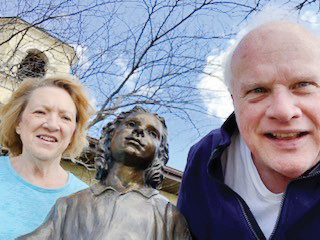 “We hunt for outside statues and have found nearly a dozen,” John said. “We keep trying to discover them, but it’s just as meaningful to go to a park or other quiet spot where there are few distractions.”
Both John and Gloria emphasized there’s nothing special about them. What they do is just one example of many different caring activities in the diocese during the pandemic.
They have recited the Rosary in rural Agnew, Brainard, Davey, David City, Dwight, Seward, Elmwood, Syracuse, rural Waverly and numerous sites in Lincoln. Some of the sites are convents, schools, churches and prayer gardens.
Recently, Gloria remarked how busy John had been in a leadership position with a volunteer organization in Nebraska. It had cut into their time together.
“She was right,” Strope said. “Time with her is a priority. I resigned from the organization and wrote the reasons why.”
He told the organization’s leadership how important time with his wife is, and how important saying the Rosary together has become. He also told them about his prayer life.
There are so many other things in addition to prayer people can do, he said. Start doing something, or start doing it more intensely. Gloria, a retired elementary school teacher who grew up in Falls City, said she and John take drives to pray the Rosary whenever it’s convenient, two or three times each week.
More ways to care
Bill Sullivan manages the Catholic Social Services thrift store in Imperial.
Sullivan also is known for stepping up for anything needed, according to those who know him. He recalls various times people reached out to others with care and kindness.
He remembers when parishioners and others agreed about the need for more faith-based activities for youths. While youths occasionally gathered, the idea of taking them to McCook for the Life Chain met with approval. (Life Chains have formed across the United States and Canada—and the world—to make a public, prayerful, peaceful witness against legalized abortion.)
Then, a Life Chain began in Imperial.
“People also have showed care for youths in other ways,” Sullivan said. “While CCD and godparent classes were already established, organizers began to invite different parishes and acquired top line speakers for youths. It called for smaller parishes to work together.
The thrift store helps make people more connected with charitable groups, he said. Before the store, he hauled donations from McCook and stored them for others in an unused building.
“The next thing you know, CSS asked if Imperial would open a store,” Sullivan said.
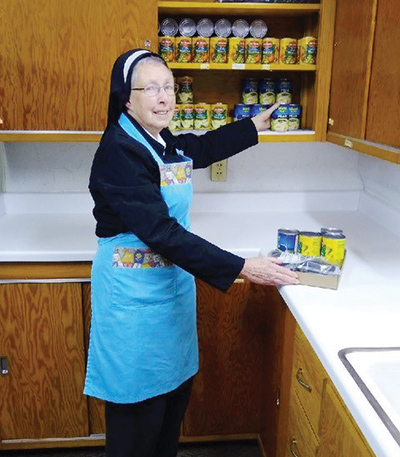
Sometimes, donations to the store show up almost miraculously, he said. Someone will need an item the store doesn’t have. Then, through an act of kindness, that item shows up while still needed.
Regarding some senior citizens, the pandemic created difficulty for some who played cards on a regular basis. Card games were a big part of their social communication. To help fill the void, people contact them regularly to let them know they are not forgotten.
When both adults from a family were quarantined from coronavirus, the food situation became an issue in some instances. Again, people stepped up with home deliveries.
Another random act of kindness via the thrift store helped deserving individuals and families. A Lincoln family donated $1,200 to be used as needed. The money came from the government relief stimulus checks which the couple wanted to give to a worthy cause.
“That’s what it’s about,” Sullivan said. “Being connected with the store through Lincoln, we can come up with ideas to adapt.”
For example, one woman buys one man’s billfold and one woman’s wallet each year. She puts $50 in each to give to a deserving individual or family. During Christmas, he and others see so much kindness it’s hard to fathom.
Sullivan and his wife, Marianne, retired from ranching and moved to Imperial more than 20 years ago.
