

By Randy Porter
(SNR) - Diocese of Lincoln schools care for the whole student — academically, physically, spiritually and emotionally.
That’s the opinion of diocesan school counselors. The comments come as schools celebrate National Catholic Schools Week Jan. 31-Feb. 6.
Since 1974, schools typically observe the week with Masses, assemblies and other activities for students, families, parishioners and community members. This year’s theme is Catholic Schools: Faith. Excellence. Service. Counselors said emotional guidance has become particularly important.
St. Peter School in Lincoln added a full-time elementary counselor, Christine Jacobsen, and St. Michael in Lincoln added a part-time counselor, Nikki Wemhoff.
“It is a privilege to be a counselor in a Catholic school where you can share your faith with students,” Jacobsen said. “That is number one!”
Furthermore, she said, it’s great to have so much collaboration with administration, teachers and parents to support students academically, emotionally and spiritually.
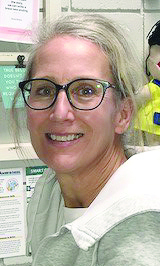 Jacobsen teaches whole-class instruction on social emotional learning such as emotional regulation, self-awareness and social awareness. She provides responsive services when students need one-on-one counseling. The former fifth grade teacher also facilitates small groups for emotional support dealing with issues such as friendships, grief or anxiety.
“Anxiety is on the rise in our young population, and we are seeing it at St. Peter,” Jacobsen said.
Because she works for a Catholic school, she can share comforting Scripture with students. She reminds students, for example, of Mary’s presence to comfort and protect them.
If a student is struggling, sometimes the counselor offers the student an opportunity to pray in church in front of Jesus in the tabernacle. She offered a small grief group for fifth through eighth grade students who have lost loved ones. It was a safe place for them to talk about their experiences.
They shared family memories and described how life has changed for them with their loved one gone. The parish priest attended the group to answer tough questions. She was nervous before the first grief group meeting, but children are forthright and resilient, she said.
“Furthermore, God is so good when trusted to lead us.”
Being a Catholic counselor is a blessing, Jacobsen said. She assisted students in requesting Masses offered for a loved one and facilitated prayer for them.
Students learned they await reunion with God and their loved ones — God’s promise to us.
“The survey students completed at our last gathering was a testament to the healing that took place,” she said.
The counselor also initiated and facilitated two important programs popular with several diocesan schools. First, TeamMates Mentoring Program pairs a mentor with a student to provide support in the school setting. Second, School Community Intervention & Prevention provides resources and referral information for students with behavioral and emotional health issues.
Striving for academic excellence and teaching students about community service are equally important.
Last year, she coordinated an eighth grade community service project with small student groups going to Matt Talbot Kitchen and Catholic Social Services.
This year, the school cannot offer the service because of the pandemic.
Jacobsen currently coordinates a service project for junior high students to work with younger students with special needs. These opportunities shine a light on the human dignity of all persons. It can be challenging and time consuming with students’ schedules and school obligations, but it is worth it.
The counselor earned a master’s degree in school counseling from Creighton University.
“Learning under the Jesuit charisms was a blessing, she said. “I have been able to incorporate the charisms in my counseling.”
One charism translates to care for the whole person: body, mind and spirit, and promoting the human dignity of each individual. Also, Jacobsen recommends the book, “The Social Neuroscience of Education: Optimizing Attachment & Learning in the Classroom,” by Louis Cozolino.
Cozolino writes about how the brain is a social organ and how students with trauma or anxiety often become unattached in the classroom. This is where she provides services and supports students with different needs. All students can succeed in a safe and nurturing environment, and when children feel seen and heard, they will thrive and reach their full potential.
Self-knowledge also is critical. Only when students know their greatest identity as beloved sons or daughters of the Father can they understand the depths of God’s love for them.
“You are loved because you are,” Jacobsen tells them. “He created you.”
Only in this truth of God’s love will children truly desire friendship with Jesus, she said.
Father David Oldham, director of guidance at Sacred Heart School in Falls City, echoed those comments, and added that Catholic school is not just about going to college and/or getting a job.
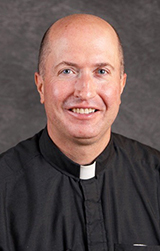 Counseling in a Catholic school always has as its goal the “ultimate graduation,” Oldham said: eternal life.
“I see my role as a guidance counselor as helping prepare students for life after Catholic-school education,” he said. “But that life should include the values that led them to be in a Catholic school in the first place.”
So, once a student graduates from high school, he or she should not see this as a “graduation from the Catholic Faith.” This is truly a “commencement,” he said, in other words, “a beginning.”
Hopefully, as counselors at a Catholic school, they are helping to form the whole student: academically, physically, spiritually and emotionally, Oldham said.
“We are forming them not only for life after school, but also for eternal life.”
Shelly Pick, director of counseling at Pius X High School in Lincoln, said diocesan school counselors are not only certified as counselors, but have chosen to do Christ’s work.
“The Lincoln Diocese is blessed to have many dedicated school counselors,” said Pick who has worked in education since 1995. “I am amazed every day by the love and dedication these people show, and I don’t know where I would be without their friendship and camaraderie.”
Diocesan counselors have the ability to get to know each student on a more personal level, she said. They help the whole student, not only academically and socially, but spiritually.
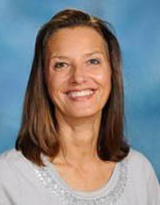 While working years in public schools, there was always a part of her that wanted to help students in a more meaningful way, she said. She wanted to talk about the lessons learned in Scripture, but couldn’t. When she began working in Catholic schools, however, the pieces of the puzzle came together.
Having the ability to pray with a student who is hurting is so fulfilling, the educator said. Feeling the Holy Spirit in the room working through her to help a student is wonderful. It also is powerful to know that counselors can bring in a priest for extra comfort or the sacraments.
Our true mission is to be a student advocate, and, in the diocesan schools, to help students get to heaven, Pick said. Students may find themselves in situations in which they have no control. Counselors work hard to build relationships with students, to know them both in, and out, of school. The more counselors know about them, the more they can work with teachers and parents to meet their needs. They regularly reach out to parents to build a sense of trust.
Another thing counselors do is meet regularly with students, she said. They enjoy seeing students in the hallways during passing periods in order to do quick check-ins. When students know who the counselors are, they are more likely to come to the counseling center when they need help. A comprehensive school counseling program includes four major areas: teaching the counseling curriculum, doing individual planning with students, responding to the needs of the school population and system support, Pick said.
Counselors organize classroom and group activities to assist students on how to work through issues such as dealing with others, study skills, or learning about a career, and the path to take to get there. Under individual planning, counselors help students assess their abilities and interests, make goals and plan for the school-to-work transition.
This includes determination of what classes to take, or setting up a job shadow experience. Responding to the needs of the population can include crisis counseling and meeting the immediate needs and concerns of students, teachers and parents. Counselors regularly meet one-on-one with students and/or parents to problem-solve. In their role of system support, counselors stay up-to-date and attend professional development opportunities. They also serve on boards and committees to stay knowledgeable about community resources.
Counseling has changed over the years in that counselors spend more time responding to the needs of students one-to-one, Pick said.
The year 2020 presented special challenges because counselors truly love to work with students, she said. When remote learning began last year, it was difficult not to talk to students face-to-face. The team, however, acclimated and set up ZOOM meetings with students with which they had concerns.
“Parents reached out to us if they were worried about the emotional well-being of their student and, together, we problem-solved,” she said.
Counseling adolescents helpful during time of self-discovery
By Randy Porter
(SNR) - Adolescence can be a tricky time for students when they start turning to their peers for answers and affirmations rather than their parents, according to Christine Jacobsen, elementary school counselor at St. Peter School in Lincoln.
“As a Catholic school counselor and as educators, we have the responsibility to support students’ formation of conscience,” Jacobsen said. “Adolescence is a time of self-discovery and with social media, polarization, and identity confusion in our world, we must walk with our students and point to the good and holy.”
St. John Paul II’s “Theology of the Body” is an important aspect for middle-level students, Jacobsen said. All people are created unique, unrepeatable, worthy of respect, understanding and love. She currently facilitates small groups with middle school girls, emphasizing some of the many unique gifts the young women offer the world.
These gifts include receptivity and sensitivity, as well as the unique gifts of communication and intuition, she said. Pope John Paul II dubbed these feminine gifts the “feminine genius.” The young women agreed it is often easier for them to articulate and share their feelings than it is for boys in their class.
“This can be advantageous in our relationships, and it also can be harmful,” Jacobsen said. “We talked about gossip and hurtful words, too.”
The girls learned we are all made for relationship and community and how we treat one another matters, she explained. During small groups, students traced one girl’s outline on a large piece of paper and the girls wrote some of their gifts and talents on it. One of the students wrote, “wonderfully made” in the middle of the poster.
“I was able to remind them of the unique gift of motherhood,” Jacobsen said. “A great discussion followed. How beautiful is that!”
Classroom teachers have no time to spare, she said, so as a school counselor, she can lead small groups, listen to the students and help them navigate life in a mixed-up world.
