

Q. What became of Mother Teresa’s order?
A. Mother Teresa – who died in 1997 and was canonized St. Teresa of Kolkata Sept. 4, 2016 – was well known for dedicating her life to serving “the poorest of the poor.”
She and the order she founded, the Missionaries of Charity, were recognizable worldwide by their distinctive white sari with a blue stripe, and by their loving care for the unwanted and the forgotten.
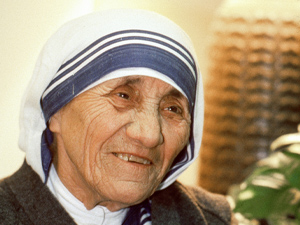 St. Teresa joined the Sisters of Loretto at the age of 17 and was a teacher in Calcutta (Kolkata). She later contracted tuberculosis and was sent away to convalesce. On that trip, she received a calling from God to leave her convent and live among the poor. She received permission to do so and worked in the slums of Calcutta. She was joined by former students, caring for those dying in the gutters. Her order, the Missionaries of Charity, officially became a congregation of the Diocese of Calcutta in 1950.
The congregation quickly grew from a single house for the dying and unwanted, to hundreds around the world. Mother Teresa set up homes for AIDS sufferers, for prostitutes, for battered women, and orphanages for poor children. The order continued to grow after Mother Teresa’s death and is still active, with more than 5,500 members in over 170 countries. The Missionaries of Charity includes active and contemplative sisters, active and contemplative brothers, priests, and lay missionaries. They welcome volunteers (www.motherteresa.org).
Father Thomas Walsh of the Lincoln Diocese served a three-year mission with the Missionaries of Charity in Gallup, N.M., where they have homeless shelters and a soup kitchen. Aquinas High School in David City and Bishop Neumann High School in Wahoo make regular mission trips for students to assist the Missionaries of Charity in New Mexico and in Chicago, and other groups across the diocese have volunteered with the missionaries, as well.
Bishop James Conley, while serving as a young priest at the Vatican, often celebrated Mass at the Missionaries of Charity convent in Rome, and accepted their invitations to visit and serve at the order’s homes in Russia, Armenia, and Kenya.
When Mother Teresa was canonized in 2016, Bishop Conley wrote about one of the times he met her, and how she wrote a letter to his parents, celebrating their reception into the Catholic Church. But he also reported how sometimes, over the 10 years he celebrated weekly Masses for the Rome convent, “Mother Teresa would simply show up unannounced and pray and work with her sisters: scouring pots, sweeping floors and welcoming the homeless women of Rome to her convent.”
He said the humility, faith and high expectations of Mother Teresa are unforgettable.
“She never assumed a privileged place in her community; she never expected special treatment; she never looked for honor or recognition,” he wrote. “She simply loved as the Lord Jesus loved, and she taught others to do the same.”
Mother Teresa’s Missionaries of Charity continue to do so today, all over the world.
Write to Ask the Register using our online form, or write to 3700 Sheridan Blvd., Suite 10, Lincoln NE 68506-6100. All questions are subject to editing. Editors decide which questions to publish. Personal questions cannot be answered. People with such questions are urged to take them to their nearest Catholic priest.
