

Q. The Bible was written centuries ago—why was it stopped?
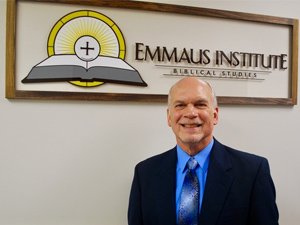
Editor’s Note: The Register posed this question to Dr. Vern Steiner, president of The Emmaus Institute for Biblical Studies in Lincoln.
A. Thank you for asking this interesting and important question. Let me respond to it in four parts.
First, we must be clear on what the Bible is and how it “speaks.” When the Bible claims, and the Church confesses, that “all Scripture is inspired by God” (2 Timothy 3:16; cf. 2 Peter 1:20-21), it means more than simply that the Bible can be trusted as a reliable source of historical information about persons, people groups, places, and events of long ago. Rather, it means that the Bible is the fresh and ever-living voice of God, that through these words God wants to talk to us.
It also ensures that what it once said is what it continues to say. In other words, to read Scripture properly (which the Church helps us to do) is to hear God’s voice—God’s speaking breath (the meaning of ‘inspired’). And so, although the Bible was written long ago, its message is never out-of-date, never passé. What God says is forever timeless—even more up-to-date than tomorrow’s news! Relevance does not require the addition of new books.
Second, according to Hebrews 1:1-4, God spoke “in many and various ways” in the past, “but in these last days he has spoken to us by a Son.” It is clear from this passage and from many others that once God had spoken fully in the revelation of his Son, and once that revelation had been preserved by the Holy Spirit in the writings (Sacred Scripture) and the lived memory (Sacred Tradition) of Jesus’ authorized apostles and their successors (cf. John 16:12-15), God really had no more to say.
Everything necessary for us to know God and to know God’s will for life here and in the hereafter has been fully revealed in the Son (see John 1:1-18, especially v. 18). In this light, we might say that Scripture-writing (as God’s abiding words) comes to a close analogously to the way that Jesus’ life on earth (as God’s abiding Word) comes to a close, with his mission accomplished. And yet, as the Living Word, though absent, remains present (through the Holy Spirit and the Eucharist), so the inspired words, though expended, continue speaking (through the same Holy Spirit and the abiding witness of divine revelation).
Third, the basis for the very concept of a biblical canon (the writings which the Church recognizes as holy and authoritative) derives from inferences drawn on Scripture’s own “canon-consciousness” as a discrete body of materials to which nothing can be added and from which nothing can be deleted (see, for example, Deuteronomy 4:2; 12:32; Proverbs 30:5-6; Ecclesiastes 12:10-12; John 20:30-31; 21:25; 1 Corinthians 4:6; 2 Timothy 3:15-17; Jude 3; Revelation 22:18-19). We could say that the Bible itself forecloses the notion of an indefinite openness on what counts as divine revelation.
To put this differently, the concept of a canon of inspired Scripture presupposes a determination on God’s part of a certain limitation on writings that constitute divine speech. Otherwise, the very notion of a Bible remains meaningless and irrelevant; any book belongs, or no book belongs. The canon of Scripture circumscribes a closed collection of divinely revelatory books. These books define the deposit of “the faith which was once for all delivered to the saints” (Jude 3), to which the Bible’s last chapter issues a stern warning about adding to or subtracting from “the words of the prophecy of this book” (Revelation 22:18-19).
Fourth, although it is true that what the Church calls “public revelation” is limited to the revealed word of God as Sacred Scripture and Sacred Tradition, and is not an endless or open-ended project, it is also true that God may sometimes choose to speak through so-called “private revelations,” which are sometimes approved and encouraged by the Church, but remain nonobligatory for all the faithful (see on this differentiation the Catechism para. 66-67). And it is most certainly true that God continues to speak through Bible versions which render the Sacred Scriptures, written centuries ago, in our own languages. God also continues to speak wherever and whenever those Scriptures are faithfully read, interpreted, and proclaimed today. In these ways, the Bible continues to be “written” in our minds and hearts.
 To recap, Bible-writing stopped because (a) God knows that we do not need any more Scripture than we already have (indeed, it seems that we have enough difficulty learning and living the 73 books he’s already given us!); (b) God has said everything he has to say in the revelation of his Son and in the authorized written and living testimony to the Son; (c) limitation and closure are built into the very concept of divine speech, lest there be no way to determine what God says or does not say; and (d) the Bible continues to come to us, living and speaking through translation, interpretation, and proclamation, even if the material production of Sacred Scripture has ceased.
Write to Ask the Register using our online form, or write to 3700 Sheridan Blvd., Suite 10, Lincoln NE 68506-6100. All questions are subject to editing. Editors decide which questions to publish. Personal questions cannot be answered. People with such questions are urged to take them to their nearest Catholic priest.
