

SNR: Father Kane, welcome back. You have been serving the diocese from afar; what are your thoughts on returning to Nebraska?
Fr. Kane: Thank you! I have very much enjoyed my assignment in Philadelphia and my time with the members of the administration, faculty, staff and seminarians there. St. Charles will always be special to me. Having said that, I am definitely looking forward to returning to Nebraska, taking on this new challenge and renewing friendships and working relationships with my fellow priests and the people of the diocese.
SNR: In your priesthood, you’ve done a lot of work in vocations, but you’ve also been an assistant pastor and a pastor, a teacher and administrator, and even a military chaplain. How can your experiences help form seminarians?
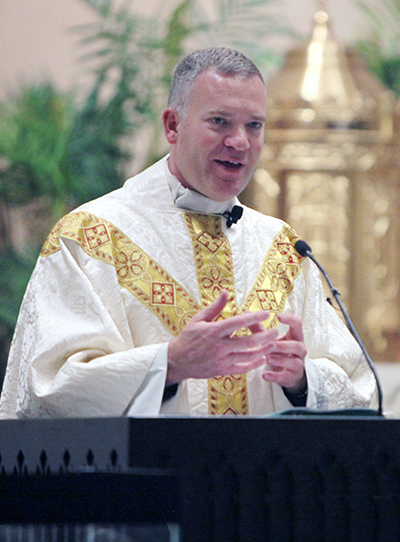 Fr. Kane: All of my experiences as a priest have taught me that we need to order our lives in this way: relationship, identity, mission. We start by acknowledging through experiences in prayer that we are known and loved by the Father, Son and Holy Spirit. That’s relationship. With awareness of that relationship, we understand deeply and personally that we are sons and daughters of the Father, regardless of our past or present behaviors. That’s our identity. Having been known and loved, we are driven to respond in love or, as St. Paul says, “to live no longer for ourselves, but for him.” (2 Cor 5:15) This is our mission. This is what it means to live our vocation in Christ.
So often, we live the opposite way, putting mission first, thinking that it will lead to an identity and that people and God will then love us because of what we do, not who we are. Seminary formation has as its main goal fostering the understanding that God loves us for who we are.
SNR: What challenges do seminarians face today?
Fr. Kane: Seminarians face an array of challenges. In their personal lives, seminarians have been immersed in a culture that does not promote virtue, simplicity, or chastity and values material goods often aimed at bringing only immediate gratification. Because of this, it sometimes becomes difficult for the men to discern and listen for the voice of God. The seminary’s program provides many resources to help seminarians to talk about the challenges they face and to get the help they need.
SNR: What should the laity of the Diocese of Lincoln know about the formation process – how can they help?
Fr. Kane: The path to discernment of a priestly vocation begins with the family. It is the first “school of formation” in the areas of faith, hope and charity and the virtues of prudence, temperance, justice and fortitude. Parents are entrusted with the task of fostering an openness to the voice of the Father. Having heard the Father’s call, a man enters the seminary, a place of more intense discernment. There is no guarantee that a man will be called to ordination, but the formation he receives helps those who discern a call to marriage to be good husbands and fathers.
I want to express gratitude for the generous response to the Bishop’s Appeal for Vocations every year. Men often would not have the wherewithal to study at St. Gregory’s without the support of so many people in our diocese.
SNR: People might ask what would make a young man consider the priesthood in this day and age, but you see men willing to accept the challenge daily – how would you describe these men? Who are they?
Fr. Kane: The men entering seminary formation today realize the secret of human goodness and have been able to see the value in living as disciples of Jesus as the real path to holiness. They are men who desire to live a life of authentic masculinity and service. They are men who desire to be known by God and loved by him and who see a relationship with him. They are men who are courageously trusting and vulnerable with their formators and spiritual directors as they seek interior freedom and healing.
SNR: This sounds daunting – how do you see the future of the Church? Where can we see hope?
Fr. Kane: Over the last six years at St. Charles Borromeo Seminary, I have seen men grow in trust, vulnerability, masculine virtue, holiness and intimacy with the Father. This growth is bearing fruit in the lives of these men and in their service to the Church and is a sign of real hope. They are responding to a Church that has been scarred by scandal, and they are allowing the Holy Spirit to strengthen them. At the same time, the Holy Spirit is strengthening our families, our parishes, our diocese and the Church.
