

Story by Randy Porter
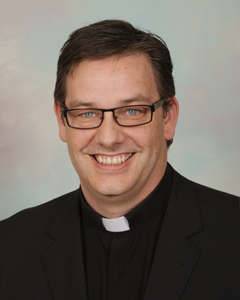
(SNR) - At this time in history, the Church needs allies, and the work of 12-step fellowships is such an important one, according to Father Sean Kilcawley, director of the Family Life Office and pastor of St. Leo Church in Palmyra and St. Martin in Douglas.
“There is too much work to be done on so many fronts within the Church,” said Kilcawley, who is also director of the Freedom from Pornography Apostolate.
“However, what I have witnessed is that it works for so many men and women.”
 The fruit cannot be denied, he said; however, admittedly, he was reluctant to send anyone to a Sexaholics Anonymous, or SA, meeting seven years ago when he became director for the Office for Family Life. What he has witnessed is that SA has played a foundational role in the lives of many who once were in darkness and now walk as children of the light.
SA helps recovering “sexaholics,” according to the group. A sexaholic is someone for whom “lust has become an addiction.” SA distinguishes itself by defining sexual sobriety as no sex with self or with partners other than with one’s spouse “in the marriage between a man and a woman,” and progressive victory over lust.
Founded in 1979, it is one of several 12-step programs for compulsive sexual behavior based on the original Twelve Steps of Alcoholics Anonymous. The group uses the “Big Book of Alcoholics Anonymous” and the book “Sexaholics Anonymous,” often referred to as “The White Book,” as a guide. The White Book explains “the sexaholic has taken himself or herself out of the whole context of what is right or wrong. He or she has lost control, no longer has the power of choice and is not free to stop.”
“When I became Director for the Office for Family Life in 2014, I identified pornography as the primary obstacle to evangelization in the Church today,” Kilcawley said.
“First, it is most common,” the priest said. “Secondly, it can be the most shameful.”
Since that time, he has had the privilege of working with many, many people within the diocese, throughout the United States and even in Europe. He has learned many programs can be helpful.
The experience of men and women who attend 12-step groups is that the group, and working the steps, helped them to learn to surrender their hearts to the Lord, he said. There is a strong human formation component to addiction recovery.
“I often say that people become addicts because they forget how to be humans,” Kilcawley said. “We can all forget that we need to be in relationship with others. We all have a desire to know others and to be known by them.”
The 12-step programs help us to remember how to do that, he said. The 12-step program of recovery is simply an intentional way of walking someone through a conversion process. In the first three steps, people acknowledge they are powerless over a substance or behavior. In Catholic terms, we might say we are powerless over sin. Only God can deliver us from sin, and we are invited to surrender ourselves to Him.
Then, 12-step members work on cleaning up their lives by doing a very thorough examination of conscience in step four, and in step five they make a general confession.
In steps six and seven, they work on all character defects; then in Steps eight and nine, make amends to those people who have been hurt. In steps 10, 11 and 12, they live in discipleship and carry the message to others who might need help in the intentional conversion process.
While there is much in common with other addictions, sex addiction can sometimes be more difficult, Kilcawley said.
“There are common indicators of addiction used in the assessment and diagnosis of various addictive substances or behaviors,” he said. “Process addictions are things like video gaming, gambling, food or sex.”
Ten criteria are as follows: loss of control; escalation (it takes more of the activity or something more intense or risky to achieve the same high); losses; continuing the behavior despite having consequences; withdrawal symptoms when stopping the behavior; it is a compulsive behavior; repeated failed attempts to stop the behavior; loss of time; preoccupation; and an inability to fulfill obligations. Anyone who meets three of these criteria should consult about whether or not an addiction is present.
With sexual addiction, however, the time it takes from having a temptation or thinking about the behavior and acting on it is much shorter than with chemical addictions, he said. Someone might start indulging in sexual fantasies in less than a second. Meanwhile, the alcoholic, for example, has to go through a process of obtaining alcohol, drinking the alcohol and waiting for the effects. This is one reason that sexual addictions are often more difficult to recover from than chemical addictions.
Shame also typically drives all addictive processes, Kilcawley said.
“Shame is the idea that there is something inherently defective about oneself,” he said. “The addictive process allows one to escape from his or her reality and this negative self perception.”
Again, with sexual addictions, there can be more shame involved especially with the older generations, the Family Life Office director said. The good news about young people today is that they have a certain understanding since they grew up in a “pornified” world. It should not surprise anyone if a 20-year-old who has had access to pornography ever since he or she was 12, could develop an addiction.
So, for many young people going to an SA meeting carries no more shame than going to an AA meeting, Kilcawley said.
Asked how he would respond to someone who told him he or she watches “a little porn,” he answered: “If that person were Catholic, I would say that porn is a grave sin, and none of us should be okay with just committing a little grave sin. If that person was not a believer, I would simply ask if it is affecting his or her life in any negative way.
“Do they hide their behavior from others?” Kilcawley asked.
“If married, I might challenge that person about whether or not it interferes with the marriage,” he said. “As a priest, I am mostly focused on helping people who are enslaved to sin to become free.”
That is what the Church is meant to do, Kilcawley said. “If someone wants help, my desire is to have all of the tools possible at my disposal in order to help them.”
To learn more about local SA meetings in Nebraska, go to www.sanebraska.org. To learn more about SA or to find national or phone meetings go to www.sa.org.
Program helps man find victory over sexual addiction
Story by Randy Porter
(SNR) - A member of the Catholic Diocese of Lincoln and recovering sexaholic continues to fight little hidden battles in his ongoing recovery.
However, with the help of Sexaholics Anonymous, or SA, and the Church, he has stopped acting out unwanted sexual behavior, he said. That is the beginning of recovery.
Recovery is continued success over lust, he said. Real recovery means being free of lust in general, free to work with his Higher Power and being of service to others.
His thoughts and comments are his own, he said. He does not speak for SA. With prayer, the 12-step program has him in a closer relationship with God and his Catholic faith.
In his 20s, he has more than a year of sobriety. SA distinguishes itself from similar groups by defining sexual sobriety as no sex with self or with partners other than with one’s spouse “in the marriage between a man and a woman,” and progressive victory over lust.
Different people have different sobriety definitions, the man said, but the principles of the program can become any personality. He was in school when it was suggested he try SA. A priest also strongly suggested it.
“At the end of the day, I joined SA,” he said. “But it is important to remember knowledge does not cure us.”
He may attend meetings three to four times a week.
The SA member said he was fortunate when he reached “rock bottom.”
Unlike some others, his rock bottom was not extremely externally damaging as it can be for other sex addicts. He did not lose a job or a marriage, and was in no trouble with the law.
“While my life was unmanageable, comparatively speaking, (my rock bottom) was not as bad as it could have been,” he said. “But, I knew I wanted to stop. It was not compatible with the Catholic way of life I wanted to live.”
His recovery has not been without relapse, he said. He can see that a sober life may be more difficult, but better. He seeks to grow and progress.
With the help of a sponsor, the program has helped him understand who God is, he said. Although he grew up Catholic, attending Catholic school, he did not have a good conception of God; he didn’t really have a personal relationship with God. In SA, he came to a power greater than himself.
“I credit the program a lot for that,” he said about building a new conception of God.
One thing he really likes about the secular side of the SA program is that it lets people come to their own conclusions about what works best for them.
The Big Book of Alcoholics Anonymous remains a primary text of the program, he said. Another book, referred to as the White Book, is more supplemental. He also seeks help from his sponsor.
His sponsor has been sober for a lot longer than he, and has a stable approach to working the 12 steps. At times, the student can be too hard on himself, and his sponsor helps him with that. Some sponsors are tough, some are not. Members are welcome to change sponsors, and vice versa.
“It’s hard to say why I want to beat the addiction, but it’s mostly the way God made me,” the recovering man said. “While I struggled to believe in the Church over the years, I kept coming back. The grace of God, and the nagging feeling that things can be better, kept driving me forward.”
