

Vatican City (CNA/SNR) – Pope Francis said he instituted the new ministry of catechist with the hope that it would help to “awaken this vocation.”
Addressing participants in a meeting organized by the Pontifical Council for Promoting the New Evangelization Sept. 17, the pope referred to his decision to formally institute the new lay ministry in May.
“We must insist on indicating the heart of catechesis: the risen Jesus Christ loves you and never abandons you! We can never tire or feel we are being repetitive about this first proclamation in the various stages of the catechetical process,” he said.
“This is why I instituted the ministry of catechist. They are preparing the rite for the, I quote, ‘creation’ of catechists. So that the Christian community may feel the need to awaken this vocation and to experience the service of some men and women who, living the celebration of the Eucharist, may feel more vividly the passion to transmit the faith as evangelizers.”
The pope established the new ministry through the apostolic letter Antiquum ministerium (“Ancient ministry”) May 11.
While catechists have served the Church since New Testament times, an instituted ministry is a type of formal, vocational service within the Catholic Church. The newly instituted ministry of catechist is for lay people who have a particular call to serve the Catholic Church as a teacher of the faith.
In the apostolic letter, the pope said the Vatican Congregation for Divine Worship and the Discipline of the Sacraments would “soon publish” the Rite of Institution of the new ministry.
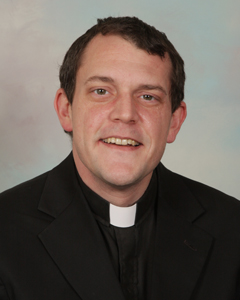 “Both personally and as the Director of Religious Education, I am very much looking forward to the development and long-term implementation of the ministry of catechist,” said Father Andrew Heaslip of the Diocese of Lincoln. “I see this forthcoming ministry as a true gift to the Church and a very fitting way to underline the importance of catechesis. Indeed, the Catholic faith is transmitted, in no small way, through the work of catechists.”
Though it will take the USCCB time to develop the liturgical rite and directives for this ministry based upon Antiquum Ministerium, Heaslip said his office was already beginning to consider and map out what the training and requirements would look like in the Diocese of Lincoln.
Based upon a letter from the USCCB Committee on Evangelization and Catechesis, a document for the United States will be ready in 2023.
“Obviously, that is still a ways to come,” he said, “however, at this time I would like to invite those whose hearts have already in some way been stirred by the thought of this ministry to take some real time of discernment and prayer this year to see if Christ is inviting you to this life-lone ministry.”
In his Sept. 17 address, the pope spoke about celebrating the closing Mass of the International Eucharistic Congress in Budapest, Hungary.
He said catechesis “can be effective in the work of evangelization if it keeps its gaze fixed on the Eucharistic mystery.”
“We cannot forget that the privileged place of catechesis is precisely the Eucharistic celebration, where brothers and sisters come together to discover ever more the different forms of God’s presence in their lives,” he said.
Speaking in the Vatican’s Clementine Hall to Catholics responsible for catechesis in Europe, the pope fondly recalled the two catechists who prepared him for his first Communion.
“I felt a great respect, even a feeling of thanksgiving, without making it explicit, but it felt like veneration,” he said.
“Why? Because they were the women who had prepared me for my first Communion, together with a nun. I want to tell you about this experience because it was a beautiful thing for me to accompany them to the end of their lives, both of them. And also the nun who prepared me for the liturgical part of Communion: she died, and I was there, with her, accompanying her. There is a closeness, a very important bond with catechists…”
Referring to the Directory for Catechesis, released in June 2020, he said catechesis should not be understood as “an abstract communication of theoretical knowledge to be memorized as like mathematical or chemical formulas.”
It is rather “the mystagogical experience of those who learn to encounter their brothers and sisters where they live and work, because they themselves have met Christ, who has called them to become missionary disciples,” he said.
He then referred to his address Sept. 13 in St. Martin’s Cathedral, Bratislava, in which he encouraged Slovakian Catholics to draw inspiration from Sts. Cyril and Methodius, who translated the Bible into the Slavonic language.
He told catechists in Rome: “They beat new paths, invented new languages, new ‘alphabets,’ to transmit the Gospel, for the inculturation of the faith.”
“This requires knowing how to listen to the people, to listen to the peoples to whom one is proclaiming: listening to their culture, their history; listening not superficially, already thinking of the pre-packaged answers we carry in our briefcase, no! To truly listen, and to compare those cultures, those languages, even and above all the unspoken, the unexpressed, with the Word of God, with Jesus Christ, the living Gospel.
“And I repeat the question: is this not the most urgent task of the Church among the peoples of Europe? The great Christian tradition of the continent must not become a historical relic, otherwise, it is no longer ‘tradition.’”
He continued: “Tradition is either alive or it is not. And catechesis is tradition, it is trador [in Latin], to hand down, but as living tradition, from heart to heart, from mind to mind, from life to life. Therefore: passionate and creative, with the impetus of the Holy Spirit.”
“I used the word ‘pre-packaged’ for language, but I fear catechists whose heart, attitude, and face are ‘pre-packaged.’ No. Either the catechist is free, or he or she is not a catechist. The catechist lets herself or himself be struck by the reality he or she finds, and transmits the Gospel with great creativity, or is not a catechist. Think about this well.”
