

Q. What is required to become a religious brother in the Church?
Editor’s Note: The Register posed this question to the Knights of the Holy Eucharist, religious brothers serving the Diocese of Lincoln. This response was written by Br. Solanus Marie, KHE. 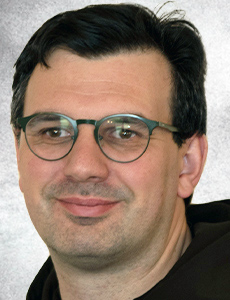
A. Once a man has a deep love for the Lord he must come to understand vocation. Vocation in the Catholic sense is more than just a job, the Catechism of the Catholic Church states, ““Christ, . . . in the very revelation of the mystery of the Father and of his love, makes man fully manifest to himself and brings to light his exalted vocation.” It is in Christ, “the image of the invisible God,” that man has been created “in the image and likeness” of the Creator. It is in Christ, Redeemer and Savior, that the divine image, disfigured in man by the first sin, has been restored to its original beauty and ennobled by the grace of God.”
Vocation becomes not a job, but rather a man’s participation in the life of the Trinity. This participation then grows into a uniquely mirrored image of the very life and person of Jesus Christ.
Vocation is that personal call Jesus desires us to live out. God calls each of us particularly to live out His life in a unique and special way as a witness to all He puts in our life to share His love, and mercy with His creation. This deep call each and everyone has if they listen. This is the first step to becoming a religious man.
“Love the Lord your God with all your heart, with all your soul and with all your strength” (Dt. 6:4-5) combines for a religious with “You shall love your neighbor as yourself” (Lv 19:18). Now that Jesus has come down and fully revealed that God first loved us, it is no longer a command but a response to the gift of love where God comes to meet us.
Once a man has come to see a possible call from our Lord to the religious life it is important to then discern how particularly God is calling them. It is important from this stage forward to get a spiritual director to help the discernment process. Discernment can be reinforced by visits to communities, and going on retreats.
As a young man moves forward with his inner life he comes to discover what a religious brother truly is. To be a religious brother is also to be a mediator of the love of the Son, the Mediator par excellence, who “loved them to the end” (Jn 13:1) and asked us to love one another as He loved us (Jn 13:34). In this world that God loves so much, the religious brother cannot hide. On the contrary, he experiences the impulse to go out to encounter and embrace God. In contemplating the saving work of God, the religious brother discovers himself to be an instrument which God wants to use to make the covenant, God’s love and concern for the weakest, more visible.
Once a community is chosen, Canon Law takes over the succinct guidelines instituted by holy mother Church in her tradition and wisdom.
The first stage for many communities is a candidacy period. In this stage an individual is spending time with the community on a more permanent basis, but may still be working in the world while participating in aspects of community life.
Mother Angelica, the founder of EWTN had this to say about discernment, “Unless you are willing to do the ridiculous, God will not do the miraculous. When you have God you don’t have to know everything about it. You just do it.” A candidate must learn to see the world in a whole new light - Jesus Christ - and fully trust that He will guide the man where he needs to go. Mother Angelica also said, “Faith is one foot on the ground, one foot in the air, and a queasy feeling in the stomach.” As a candidate it is learning to trust in your brother, your Lord, and your God Jesus Christ. Candidacy has no particular time limit attached to it.
Postulancy is the first formal stage of formation in a community, though not required by canon law. Postulancy is commonly between six months to a year. In my community, the Knights of the Holy Eucharist, we have a 1-2 year program for a postulant. The postulant continues his transition from secular life to consecrated life, He is beginning his formation in the particular spirituality of the community, and receives the instruction and assistance he needs to make a prayerful, mature choice about his vocation.
After postulancy the community formally accepts a person into their formation program called novitiate. As a novice a man will commonly put on a simple version of the habit, or for some communities the community habit. The person is given formal training in living and learning to be an integral part of the community at this stage.
According to Canon Law the novitiate can be up to two years, but no longer. The novitiate is the principal phase of formation as the novice enters more fully into the community. Under the guidance and care of the vocation director or novice master, the novice learns the responsibilities of community life; practices the evangelical counsels of chastity, poverty, and obedience; and grows in knowledge of his divine vocation - whatever it may be - and of the community.
The next stage is when a novice will be accepted into simple vows. At this stage the habit commonly changes slightly in many communities. When vowed you are integrated in a covenantal way to God and the community. An individual will commonly take simple vows for up to five or six years.
The juniorate, as we call it as Knights of the Holy Eucharist, is a period of formation that lasts the whole time of private vows. During this time, the man affirms his voluntary commitment made to God. Through human, spiritual, religious, and apostolic formation, he prepares that he may better serve the Church as a vowed religious. At the same time, he strives to reach the personal maturity necessary to make his final profession of vows if that is God’s will.
When the time of private vows has been completed and the religious man is wholly dedicated to his mission and sufficiently understands what he will be undertaking, he makes his final profession of the vows of poverty, chastity, and obedience, committing to remain in the community for life. He strives ever more to live out his calling and grow in holiness.
But this is truly only the beginning, not the end. A religious man has wholly decided to exchange the finite goods of this world for the eternal goods offered to him by God, a commitment that extends beyond the earthly life into eternity. This is a glimpse of what a man should expect when looking into the religious life in the Catholic Church.
Write to Ask the Register using our online form, or write to 3700 Sheridan Blvd., Suite 10, Lincoln NE 68506-6100. All questions are subject to editing. Editors decide which questions to publish. Personal questions cannot be answered. People with such questions are urged to take them to their nearest Catholic priest.
