

Success depends on cooperation of all parishioners in the diocese
By S.L. Hansen
for the Register
It’s not enough to encourage (a woman without support) to have her baby. She needs more than that, for quite some time. “We’ll walk with them however long they need.”
Pro-life people from across the diocese have shown their support of children and families in need through the annual diaper drive hosted by the Lincoln Diocesan Council of Catholic Women (LDCCW).
Now in its 15th year, the LDCCW diaper drive distributes hundreds of thousands of diapers to Nebraska families, enabling them to stretch their income to cover other necessities such as food, health care and housing.
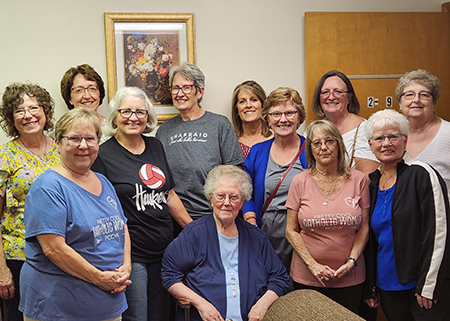
“Providing diapers to families in need addresses a fundamental necessity for infants and toddlers, alleviating financial stress for parents,” said Katie Patrick, executive director of Catholic Social Services of Southern Nebraska (CSS). “It acknowledges the importance of family stability, which is crucial for raising healthy, thriving children.”
With locations in Auburn, Hastings, Imperial and Lincoln, CSS has the largest population of clients and thus receives most of the donated diapers from LDCCW. In fact, CSS has seen “notable growth” in diaper distribution, increasing from 6,777 packages distributed two years ago to 9,950 in their most recent fiscal year (July 1, 2023-June 30, 2024).
CSS provides their clients one package of diapers every 30 days as long as they are in need. Patrick said this gift ensures that children remain “clean, healthy, and comfortable, which is essential for their development.”
The Women’s Care Center (WCC) in Lincoln receives diaper donations from LDCCW as well as other contributors. Since opening four years ago, the number of mothers they have served has skyrocketed from a handful in 2020 to 788 in the last year, all of whom can count on receiving diapers and wipes from WCC whenever their children need them.
Paul Mach, outreach associate, said WCC’s mission is to serve women and their children “from conception to kindergarten.” During that time period, a child can average 8,000 diaper changes, according to the American Academy of Pediatrics.
Mach said that even more important than meeting an everyday need, offering free diapers enables workers to maintain contact with mothers.
“Those diapers and wipes and other things … are incentives for the women to come back and receive more support from us,” Mach explained. “We always try to see where the woman is at, to talk to her.”
He continued, “We’re very woman-focused, and we want to make sure the women feel loved, encouraged and supported, to make sure they are doing well and living their best lives.”
Mach noted that women who come to WCC don’t have the kind of support that most married women have when they are pregnant. Husbands, grandparents, and other family members or friends are often eager to help the new mother and her child.
For a woman who is not in that situation, WCC workers offer consistent, reliable encouragement, medical referrals and parenting classes, as well as practical items.
“One of the biggest reasons women might not choose life, is that they don’t have the support,” Mach reasoned. “The voices in their head say they can’t do this or that it will ruin their life.”
It’s not enough to encourage such a woman to have her baby. She needs more than that, for quite some time.
“We’ll walk with them however long they need, so their lives are better” Mach said.
Patrick said parents who receive the free diapers and wipes donated through LDCCW “express deep gratitude, relief, and happiness.”
She added, “Parents often share their stories and appreciate the compassion behind the assistance, reinforcing their feeling of being supported during challenging times.”
Kay Wessel of Sacred Heart Church in Crete has also experienced this kind of reaction in her work as the LDCCW diaper drive coordinator since the program’s inception 15 years ago.
Part of her role is organizing the drive by deanery – a geographical grouping of parishes – and then ensuring that the diapers or monetary donations to buy diapers and wipes are used within the deanery in which they were collected. Sometimes, she will deliver diapers to various agencies.
Wessel recalled making a delivery to one location and discovering that a client had arrived shortly before her, asking for diapers in a particular size. The agency had run out, and the woman was desperate, as she and her family were about to travel to another state to attend a funeral.
“I had that size diapers in my trunk, and wipes,” Wessel said. The grateful mother drove away with exactly what her child needed.
As pro-life people, Wessel said, “we wouldn’t want a family to feel like they have to ration diapers, or to choose between keeping their children sanitary or buying food.”
At press time, the LDCCW diaper drive was in its final week, so Wessel was unable to report how many donations were made in 2024. In 2023, however, more than 160,000 diapers were collected… and the supply ran out in June. Fortunately, monetary donations have enabled her to purchase diapers and wipes as needed to keep distributing agencies supplied.
“The drive would not be successful without the cooperation of all the parishioners in the diocese,” Wessel said. “That’s the biggest benefit I see, these families knowing the community is there to help them.”
Patrick agreed. “By investing in the basic needs of families, we contribute to a culture that prioritizes a culture of life.”
To donors, Mach said, “You’re the reason we’re able to help these women. The donors keep our mission going.”
