

Guest column by Greg Schleppenbach
CEO, The Culture Project International
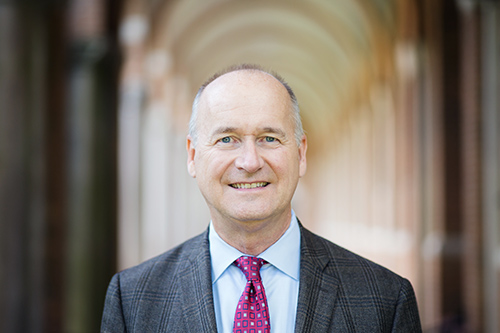
Schleppenbach, former pro-life director and executive director at the Nebraska Catholic Conference, will be the keynote speaker at the annual Bishops’ Pro-Life Banquet Nov. 22.
Those old enough to remember ABC’s “Wide World of Sports” (featured every Saturday from 1961-1998) will recall the show’s famous opening line by host Jim McKay: “Spanning the globe to bring you the constant variety of sports—the thrill of victory…. and the agony of defeat”—with its accompanying images of victorious champions and a skier painfully tumbling down the mountain.
As I prepared to draft this column wondering about, and praying and fasting for, the Nov. 5 election, these famous words came to mind. Would the outcome of the abortion ballot measures in Nebraska (and elsewhere) result in the thrill of victory or the agony of defeat? As I contemplated this question, it occurred to me that regardless of the outcome, there are at least two critical points to keep in mind as we move forward.
 First, as Christians, we must never forget that we operate from victory, not just for victory. The ultimate battle over death and the devil was won by our Lord and Savior Jesus Christ.
Second, the goal of the pro-life movement must always stay focused on making abortion and other attacks against human life unthinkable, not just illegal.
Regarding the first point, these powerful words from the late Father Richard John Neuhaus have long been a source of inspiration and encouragement to me–in good times and in bad times: “So long as we have the gift of life we must protect the gift of life. So long as it is threatened, so long must it be defended. This is the time to brace ourselves for the long term. We are today laying the foundations for the prolife movement of the twenty-first century. Pray that the foundations are firm, for we have not yet seen the full fury of the storm that is upon us.
“But we have not the right to despair. We have not the right and we have not the reason to despair if we understand that our entire struggle is premised not upon a victory to be achieved, but a victory that has been achieved. If we understand that, far from despair we have right and reason to rejoice that we are called to such a time as this, a time of testing, a time of truth. The encroaching culture of death shall not prevail, for we know, as we read in John’s gospel, ‘The light shines in the darkness, and the darkness has not overcome it.’ The darkness will never overcome that light.”
With this confidence in mind, we must never forget that the devil still exists and continues to “prowl about the world seeking the ruin of souls.” As Dr. Peter Kreeft reminds us, it is important for us to remember who is the real enemy in this battle. It is not the media, or abortionists, or pro-abortion Catholic politicians, or those who promulgate filth. They are our “patients,” the “victims of our enemy.” Our real enemies are “demons, fallen angels, evil spirits.”
Our responsibility as followers of Christ is to use every gift we’ve been given to faithfully, persistently, and confidently fight against the evil that the devil and his minions never tire of sowing. “We go into gutters and pick up the spiritually dying and kiss those who spit at us, if we are cells in our Lord’s Body,” Dr. Kreeft beautifully advises. “If we do not physically go into gutters, we go into spiritual gutters, for we go where the need is.” As our Lord makes clear, it is how–or whether–we invest the talents He gives each of us that will determine whether or not we hear these words when we must account for our lives: “Well done good and faithful servant… enter into the joy of your Master.”
The second point flows naturally and beautifully from the first point. When we recognize who the real enemy is, it is easier to recognize that while protecting human life in the law is a critical goal of our pro-life work, the ultimate goal is the conversion of hearts and minds to see and embrace the inviolability of human life because it is made in the image and likeness of God and is therefore sacred.
What is the plan for achieving this goal–of building what Pope St. John Paul calls a “new culture of life”? He gives us a road map in Evangelium vitae, where he describes how we must proclaim, celebrate, and serve the Gospel of Life. “Everyone has an obligation to be at the service of life” he says, “which requires concerted and generous action by all the members and by all sectors of the Christian community…called by the Lord to ‘become the neighbour’ of everyone: ‘Go and do likewise’ (Lk 10:37).”
In carrying out this road map, Pope St. John Paul points out that “the first and fundamental step towards this cultural transformation consists in forming consciences with regard to the incomparable and inviolable worth of every human life” by re-establishing “the essential connection between life and freedom” and “freedom and truth.”
Also critical to cultural transformation are strong marriages and family life. “Within the people of life and the people for life,” the family has a decisive responsibility” because it “is truly ‘the sanctuary of life.’” Further, he notes that “It is an illusion to think that we can build a true culture of human life if we do not help the young to accept and experience sexuality and love and the whole of life according to their true meaning and in their close interconnection. Sexuality, which enriches the whole person, ‘manifests its inmost meaning in leading the person to the gift of self in love.’(128) The trivialization of sexuality is among the principal factors which have led to contempt for new life. Only a true love is able to protect life.”
Pope St. John Paul saw decades ago what we all see in disturbing focus today. The culture of death has its tentacles everywhere and its sights are set in particular on young people by spreading counterfeit, seductive—and deeply destructive—propositions about love, life and identity. The culture of death understands all too well that to move the cultural ship in a certain direction it needs to form the young. And form the young it has done—with catastrophic results. This reality is undoubtedly why this modern-day saint wrote Evangelium vitae, established World Youth Day, and otherwise invested so heavily in reaching and forming young people.
This saint and his guidance was the inspiration for The Culture Project, the organization I am privileged to lead. The Culture Project (www.thecultureproject.org) is an initiative of young people set out to restore culture through the experience of virtue. We do this by extensively forming recent college graduates who commit to at least one year on mission where they provide dynamic, peer-to-peer presentations and mentoring to middle and high school students on the inherent dignity of the human person, the benefits of living sexual integrity/chastity, and healthy living in an online age. We are reaching and forming young people before the culture of death gets its grip on them and leads them down dark and destructive paths.
If there is anything I’ve learned from Pope St. John Paul and from more than 30 years fighting the supply side of abortion it is this: if we are going to fundamentally change the trajectory of our culture toward life and love, it is crucial that we significantly increase our investment in reaching and forming young people.
