

“Go therefore and make disciples of all nations, baptizing them in the name of the Father and of the Son and of the Holy Spirit.” - Matthew 28:19
For this first installment of “A Pilgrimage of Truth, Goodness and Beauty: A Humanities Syllabus,” I have chosen the theme: “Universal Faith – American Soil.” At the very end of St. Matthew’s gospel, we hear the call to discipleship, that we are all called to be missionary disciples, each in our own particular vocations. This is also the “Year of Mission,” the theme of this third year of our National Eucharistic Revival.
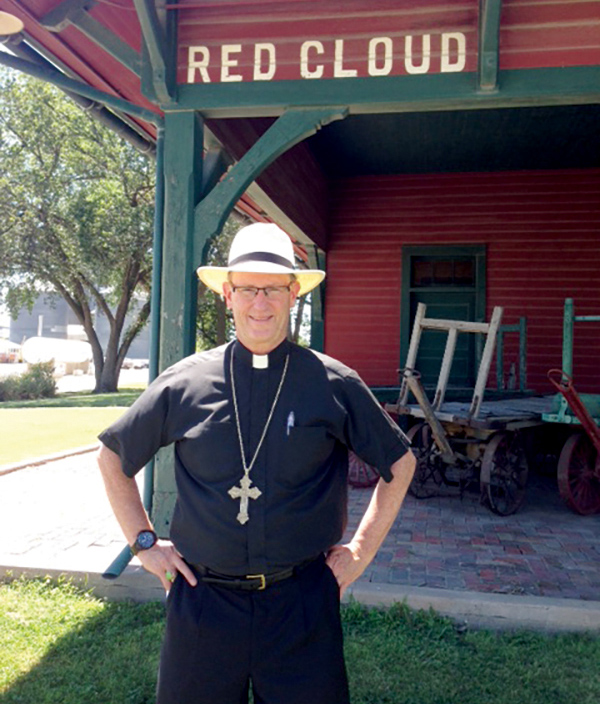
 For us, our feet are firmly entrenched on American soil. You can still find the ruts from the pioneers’ wagons in that soil from when they traveled across the country. They then turned that soil to build the foundations of towns that today are thriving. Many of them were farmers, who planted seeds in that soil and prayed that through their hard work and God’s blessings, they could survive the storms and harvest the fruits of their labor.
Through the years, as that American soil yielded crop after crop, the men and women who worked that soil were also growing families, growing a country and growing our faith. As the United States expanded, Catholic churches were a part of the landscape. The faith that reaches to the ends of the earth and beyond became rooted in the soil of a young and promising country. They grew together on this land, side by side.
Our focus on mission this month can be seen throughout the Humanities selections I am recommending. They offer a deep and soulful perspective of our faith, alongside examples of determination, courage and the American pioneer spirit influenced by the Holy Spirit. Our Catholic faith is a universal faith, and although we stand with both feet on American soil, our mission is to share our faith with everyone who shares the entire earth with us.
John Senior, one of three professors who taught me in the Integrated Humanities Program at the University of Kansas and who I asked to be my godfather when I entered the Catholic Church during my junior year, has been quoted often as saying “we are made for the stars, but we are rooted in the soil. We are made to seek spiritual realities, but we must use this world, this visible creation, to do so.”
 Books
Books
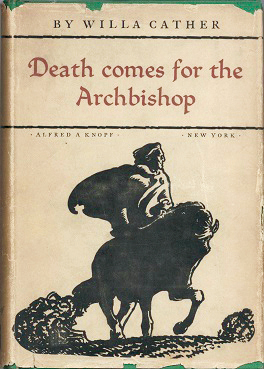
The works in this list are all a part of our shared history – the history of our lands and the history of our Catholic faith. It is good to know our history: our own personal history, the history of our country, and the history of our Church. The “historical novel” has been a literary genre that has chronicled history down through the ages. While not an exact and scientific account of history, historical novels tell stories which are based on real persons, events and significant episodes in human history. One of my all-time favorite historical novels is “Death Comes for the Archbishop” by the great Nebraska author, Willa Cather (1873-1947).
I discovered Willa Cather after my college years and before I started seminary. I was living and farming with some fellow converts in north central Kansas, just south of the Nebraska border, not far from Red Cloud, Neb., the home of Willa Cather. During my two-and-a-half years of farming, I think I read every one of Willa Cather’s books. While “Death” was my favorite, “Shadows on the Rock” comes in a close second.
 This was the story of the first Bishop of Quebec. The books that really captured my imagination were her stories of the Nebraska prairie life, “O Pioneers” and “My Antonia.” “The Song of the Lark” was about an opera singer and “One of our Own” was about World War I. They are all good and worth reading.
“Death Comes for the Archbishop” recounts the missionary journey of Archbishop Jean-Baptist Lamy, the first Archbishop of Santa Fe, N.M.. In the novel, Willa Cather changes his name to Bishop Jean-Marie Latour.
This novel illustrates faith at work and how it endures through time. Cather is able to highlight the Catholic Church’s universal mission while showing in specific detail the ability to adapt to new environments. In the book, Latour tills the soil of our faith in an unbroken land. He does it while at the same time recognizing and respecting the culture already in place. As Catholics, we are called to seek out God’s beauty in physical lands and in cultures different than our own. It can be there where our own faith takes root and grows in new, exciting and challenging ways.
Film
Joining “Death Comes for the Archbishop” on my list is the film “For Greater Glory,” produced with financial contributions from the Knights of Columbus.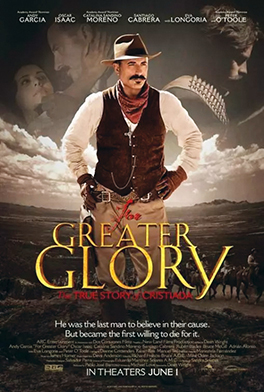
It details the story of the Cristero War in Mexico. It was a time when Catholic priests and peasants fought for their faith, and their lives. Those priests and laypeople – the Cristeros – taking up this fight were doing so in answer to Christ’s call to discipleship. The blood they shed – along with the blood of the many martyrs before and after them – provided the fertile ground for the growth of the Church on this continent. (This film is rated R by the Motion Picture Association for the gruesome depiction of violence in the movie. It is intended for mature audiences only.)
A recent film that captures our theme beautifully is “Cabrini,” the story of a remarkable woman of faith who played a pivotal role in the history of health care in the United States.
Music and poetry
Frank La Rocca’s “Mass of the Americas” stirring musical composition has been called “perhaps the most significant Catholic composition of our lifetime.” (Michael Olbash, music director of St. Pope John XXIII National Seminary). It is a striking work of art commissioned to honor Our Lady of Guadalupe. It speaks to the Church’s diversity, but also to the universality of Catholicism, which often shines through the artistic expression and talents of its faithful. The Diocese of Lincoln is honored to have been selected as one of the sites in North America to host the Mass of the Americas and we will do so in December.
James Matthew Wilson’s poem “The River of the Immaculate Conception” is a commemoration of the “Mass of the Americas” and a reflection on our Catholic faith in North America. Its name comes from a reference early French missionaries made to the Mississippi River.
In this poem, the author visualizes the Mississippi as much more than just a river of water, but a river flowing with grace, helping the seeds of faith to grow in this new land. As one thinks even more deeply about the analogy, you may be able to see how our own lives could also serve as a channel to deliver the grace of God.
(Ralph Waldo Emerson’s “Concord Hymn” is another beautiful poem about the making of this country).
Art
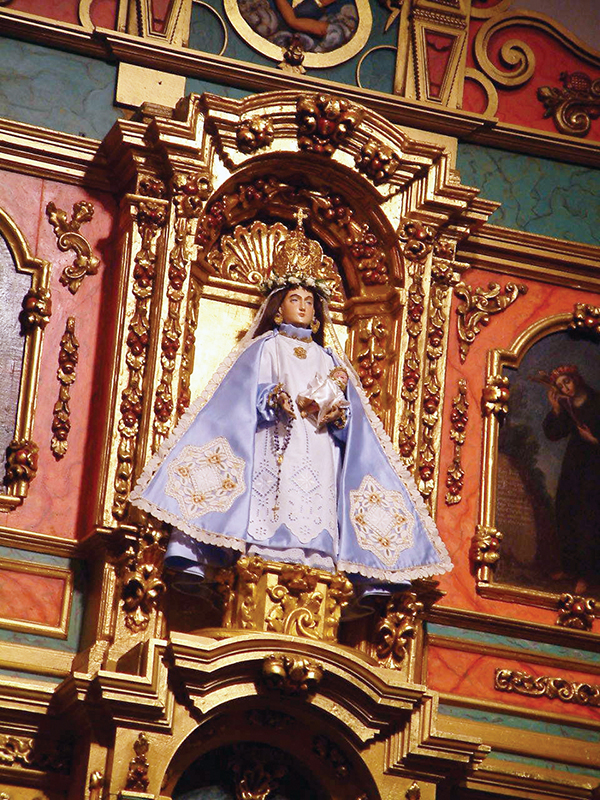
The statue of “La Conquistadora,” or “Our Lady of Conquering Love,” is in the Santa Fe Cathedral in New Mexico. It is the oldest Marian statue in America. “La Conquistadora” is an exquisite work of devotion to our Blessed Mother. Mary conquers the world not by force, but through love, always guiding us closer to her Son, Jesus. “La Conquistadora” is an inspiration for us to be a living model of our beautiful faith, just like Mary.
Together, these works can help us recognize and act on the mission for our own lives. Bishop Latour honored diversity and tradition as he worked to bring about change. Let us do likewise. The Cristeros let nothing – not even death – dissuade them from their witness to the truth. Let us do likewise. La Rocca and Wilson used their God-given talents to honor Him. Let us do likewise. And “La Conquistadora” shows us Mary and her powerful love of Christ. Let us do likewise.
Each of these works encourages us to follow the Great Commission Jesus spoke of in Matthew 28:19. Jesus gives us our mission – to make disciples of all nations. Let us do that by planting the seeds of our universal Church deep in our American soil.
BISHOP CONLEY'S HUMANITIES SYLLABUS
January: “Universal Faith – American Soil”
Books:
“Death Comes for the Archbishop” by Willa Cather
Film:
“For Greater Glory” (2012)
Art:
The statue of “La Conquistadora” (“Our Lady of Conquering Love”), in the Santa Fe Cathedral in New Mexico.
Music:
Frank La Rocca’s “Mass of the Americas”
Poem:
“The River of the Immaculate Conception” by James Matthew Wilson
ADDITIONAL SUGGESTIONS
Books:
“Oregon Trail” by Francis Parkman
(“Shadows on the Rock” by Willa Cather)
Film:
“Lilies of the Field” (1963)
“Cabrini” (2024)
Art:
Visit the Joslyn Art Museum in Omaha (free)
Music:
“Symphony #9 The New World Symphony” by Antonin Dvorak (when he was in residence at the New York Symphony) performed by the Czech National Symphony Orchestra at the Lied Center in Lincoln Feb. 26, 2025
Poem:
“Concord Hymn” by Ralph Waldo Emerson
“The Road Not Taken” by Robert Frost
Editors Note: Click here for more Diocese of Lincoln Jubilee 2025 Resources
Click here for all the Humanities Syllabus postings
