

By Bishop James Conley
“And I tell you, you are Peter, and on this rock I will build my church, and the gates of hell shall not prevail against it.” Matthew 16:18
As we continue our journey through this season of Lent, we follow Jesus on our pilgrimage into the desert to confront the enemy and his many temptations. Even as we focus on truth, goodness, and beauty, we necessarily come up against evil, seeking to prevent us from receiving and living out these gifts. In this place of exile, we reach the fruits of the Christian life only by embracing the Cross, the true victory over the enemy.
 The Jubilee Year offers the promise of freedom from the bondage of sin and death, providing hope on our journey. Our Lord’s promise to his Church that the gates of hell shall not prevail is worth recalling often. The Church, as the “Barque of Peter,” navigates rough waters, tossing in the waves as she faces evil in the world and within the hearts of her own children. We will not reach our destination, however, unless we confront this evil within us, seek conversion, and prepare for eternal life.
Each of us must face the forces of hell to some degree in this life, looking into the abyss of sin and suffering with the hope that comes from faith in Jesus Christ. Passing through death with Christ, we see the splendor of truth, goodness, and beauty all the more clearly.
Movie
 If the devil had his way, he would make the world a living hell, encircling us within its gates. There are moments when this almost seems to happen, as under the totalitarian Communist and fascist regimes of the 20th and 21st centuries. The martyrs prove that even when the enemy appears to win, we can resist and even conquer, by embracing Christ’s powerful meekness. Their witness proclaims the truth that death does not have the final victory, because we live for heaven, the goal of our pilgrimage.
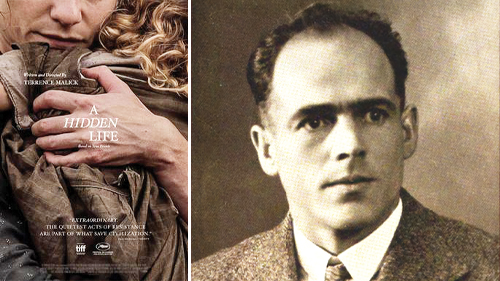
Terrence Mallic’s masterful 2019 film on the witness and death of Bl. Franz Jägerstätter, “A Hidden Life,” portrays victory through seeming defeat. The peaceful bucolic scenes of the Austrian Alps where Franz’s family lived contrast heart-wrenchingly with the dehumanization of the Nazi prisons he entered for refusing to take an oath to Hitler in the German military. Mallic’s must-see film is a visual masterpiece, bringing Bl. Franz to life, realistically portraying how a simple man can stand up to the overwhelming forces of evil.
I viewed this film in 2020, during the Covid-19 pandemic, and it left a lasting impact on me. The cruelty of godless regimes, inflicting so much pain and suffering on fellow human beings, can only be a work of the evil one.
Poem
Every day we face a battle with evil to some degree, whether on a large or small scale. Even simple things can be turned away from their proper order toward God through selfishness. Every action can become a means of loving God and showing charity toward neighbor. The little battles prepare us for the larger ones, which one day will culminate in the final trial of our death.
St. John Henry Newman’s poem “The Dream of Gerontius” depicts how this last battle of death unfolds for a dying man, whose name means an elder man (perhaps referring to a priestly identity). His family and friends come to support him as he begins his journey into the next life, and is conducted by his guardian angel to judgment through a mob and demons and then escorted into his purgation in a lake of “penal waters.” Near the beginning of the poem, Gerontius cries out, giving helpful advice for all of us:
Rouse thee, my fainting soul, and play the man;
And through such waning span
Of life and thought as still has to be trod,
Prepare to meet thy God.
And while the storm of that bewilderment
Is for a season spent,
And, ere afresh the ruin on me fall,
Use well the interval.
This beautiful and lengthy poem by Newman explores themes of death and judgement, through the journey of a soul, grounded in the truth of divine refinement of humanity through the incarnation of Christ. Newman had a vivid sense of the “unseen world” and his vivid poetic imagination takes us deep into the mysteries of our faith.
While the dying man Gerontius is still in this world but fully aware that he is dying rapidly, he cries out a very moving creed. In fact, these verses have been lifted from the poem and now are in many English hymnals around the world. You may be familiar with the hymn that begins:
Praise to the Holiest in the height,
And in the depth be praise:
In all His words most wonderful;
Most sure in all His ways.
In another verse, we hear these words which have become a popular devotional prayer.
Firmly I believe and truly,
God is three and God is one;
And next I acknowledge duly
Manhood taken from the Son.
And I trust and hope most fully
In that Manhood crucified;
And each thought and deed unruly
Do to death, as He has died.
You can also experience Newman’s masterpiece through Edward Elgar’s universally acclaimed musical setting for voices and orchestra in two parts composed for the Bermingham Music Festival in 1900.
Book
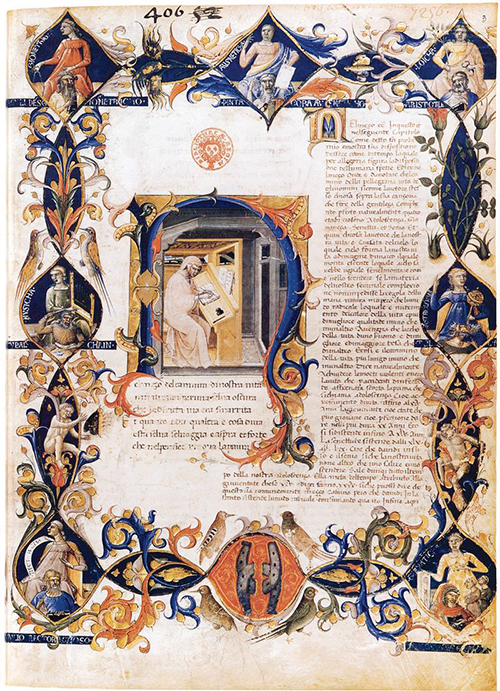
Perhaps the greatest Catholic work bringing the consequences of evil and death to life can be found in “The Inferno,” the first part of Dante Alighieri’s epic poem, “The Divine Comedy.” Within it, Dante begins his pilgrimage into the next world that will later take him to purgatory and heaven. He situated this preternatural journey during Holy Week in the year 1300, the Church’s first great Jubilee Year, embarking on a life-altering pilgrimage of grace intended to bring him and his readers to deeper conversion. “The Divine Comedy,” therefore, makes for perfect Lenten reading in this Jubilee Year focused on hope.
As Dante enters the gates of hell, he depicts the punishments of souls in gruesomely detailed fashion. Looking beyond this terror, the work teaches us just how much our earthly actions prepare our experience of the next life. Even if eternal life remains behind a thick veil, Dante finds his friends and acquaintances still immersed in the actions, relationships, and aspirations that filled their days in medieval Florence, stuck in the same attitude and tendencies. God offers us heaven as a gift, one that requires submitting to the transforming work of his grace, though hell emerges as the fruit of our own sins, enmeshed within the rebellion of the tormented fallen angels.
I highly recommend a brand-new book by the noted Dante scholar, Professor Jason Baxter, PhD, executive director for the Center for Beauty and Culture at Benedictine College in Atchison, Kan., entitled, “A Beginners Guide to Dante’s Divine Comedy.”
Art
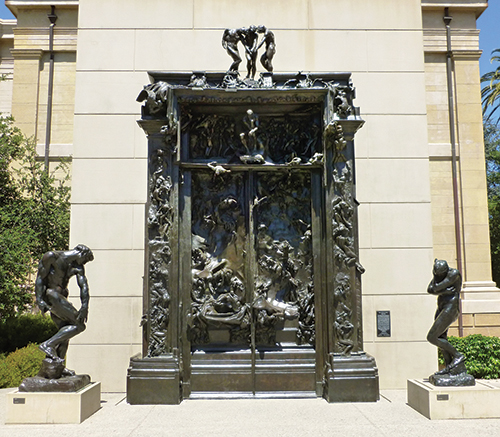
Great literature inspires great works of art. Auguste Rodin’s “Gates of Hell” gives Dante’s vision of chaos and pain tangible expression. Many of his most famous works, including “The Thinker,” probably portraying Dante himself, find their origin in this large depiction of “The Inferno” in the shape of a door. This masterpiece took decades to complete and includes 186 bronze figures in high and low relief. Rodin sought to show their isolation and the general chaos produced by sin. The three shades at the top, a cast of the same figure in three different positions, embody the defeat of hell, slumped down out of a dignified stance without hope. To contemplate its details and its development into a second more abstract version, you can explore the sculpture through a documentary video.
Music
Finally, we come to the contemplation of Jesus’s ultimate confrontation of evil and death. We give the last word this month to Our Lady through the traditional poem we pray during the Stations of the Cross uniting to her sentiments at the foot of the cross, the “Stabat Mater.”
There are many exquisite musical renditions of this text, but I find the one composed by Giovanni Battista Pergolesi on his deathbed to be particularly moving. He decided to convey the text through a duet of soprano and alto voices, creating a tension that both unnerves and uplifts. The opening, with its transfixing power, is considered one of the great duets of musical history. Within it, we cannot help but be moved by Mary’s deep sorrow before her crucified son, even as she expresses her unfailing confidence in his triumph over evil and death.
Conclusion
All of these works highlight the reality and impact of evil and death in our world. Evil and death are indeed a part of our life. They provide us with options – we can face despair or foster hope. We can concentrate on the suffering or find the joy in redemption. We cannot avoid evil and death, which is why we must confront them. They are part of our human experience. As we’ve seen with these creative works we highlighted this month, evil and death can test our faith, but as Catholics, we also know in the end, Christ is victorious over darkness. His light shines bright now and forever!
BISHOP CONLEY'S HUMANITIES SYLLABUS
March: “Confronting Evil and Death”
Books:
“Inferno” by Dante
Film:
“A Hidden Life” (2019) Terrence Malick
Music:
“Stabat Mater” by Giovanni Battista Pergolesi
Poem:
“Dream of Gerontius” by St. John Henry Newman
Art:
“Gates of Hell” by Auguste Rodin
ADDITIONAL SUGGESTIONS
Books:
Beowulf
“The Death of Ivan Ilych” by Leo Tolstoy
“The Great Divorce” by C.S. Lewis
For children: The Green Ember series by S.D. Smith
Film:
“The Seventh Seal” (1957) Ingmar Bergman
For children: “The Miracle of Marcelino” (1955)
Ladislao Vajda, “Joan of Arc” (1948) Victor Fleming
Music:
“The Dream of Gerontius” by Edward Elgar
Requiem Mass by Wolfgang Amadeus Mozart
For children: “Peter and the Wolf” by Sergei Prokofiev
Poem:
“On the Day of Death” by St. Peter Damian
For children:
“Death, Be Not Proud” by John Donne
Art:
Engravings of "The Divine Comedy" by Gustave Doré
For children: Bernt Notke, “St. George and the Dragon,” statue in Stockholm’s medieval cathedral
Website:
benedictinstitute.org
The Benedict XVI Institute for Sacred Music and Divine Worship’s unique mission is to open the door of Beauty to God
