‘The human personality of the priest is to be a bridge and not an obstacle’
Guest column by Fr. Matthew Rolling
Academic Dean and Teacher, St Gregory the Great Seminary
I had the blessing as a young priest to enjoy a number of lunch discussions with some of my high school students. During those meals, they would ask lots and lots of questions. It was after one of these lunches that a student looked at me and said, “You should write all these things down in a book.”
I laughed at myself thinking how far-fetched that seemed. Only smart people write books, I thought. It is incredibly difficult to write a book, and what would I say that hasn’t already been said were just a few of the thoughts that made me quickly dismiss the compliment.
Fast forward to the summer of 2020, when Covid was causing a great deal of disruption in all our lives. The seminary decided to host a summer formation program as a substitute for the summer formation program that would otherwise be offered by the Institute for Priestly Formation in Omaha. Because of my doctoral research, I was asked by Father Jeffrey Eickhoff to take charge of the human formation conferences that would be offered to our seminarians during the summer program. Father John Rooney, who is now the house spiritual director at St. Gregory’s, was tasked with giving the spiritual formation conferences to the seminarians.
In one of our planning sessions, I presented to Father Rooney what I was thinking of covering over the course of my conferences. After laying out my thoughts and putting forward the resources I would be using, he sat back in his chair and said, “You need to write all this down. This would be a really good book.” I was confused because I just assumed everything that I had explained was knowledge common to “everyone.”
Smiling, he looked at me and assured me that it was not, in fact, common knowledge. Those thoughts that had once passed through my mind when that high school student once suggested the same thing resurfaced, and I again dismissed the suggestion to write a book.
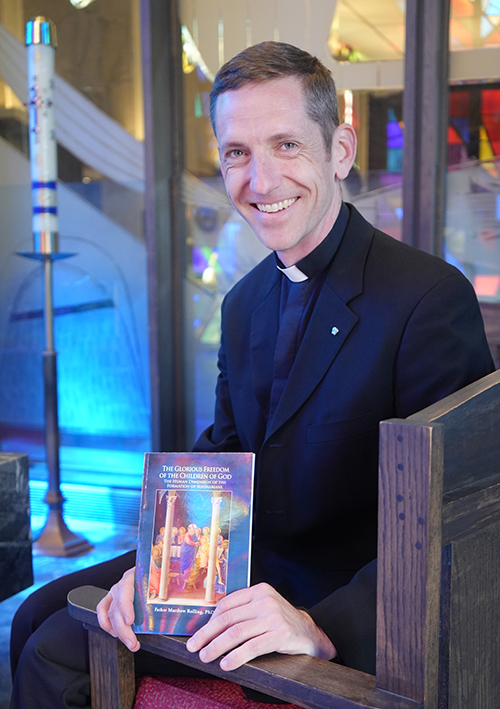
At this point, I felt more confident, as I had already written a book in the form of my doctoral dissertation. But now I really knew what it meant to write a book, and I was now less interested in such an idea.
In part, I really did not have availability to dedicate to writing a book, and I didn’t really think much of it, to be honest. Two years later, when we again offered a summer formation program for some of our seminarians, Father Rooney reiterated his comment from two years before, about the need to put this all down. Having heard similar things from other people, I decided to take his comment more seriously this time around.
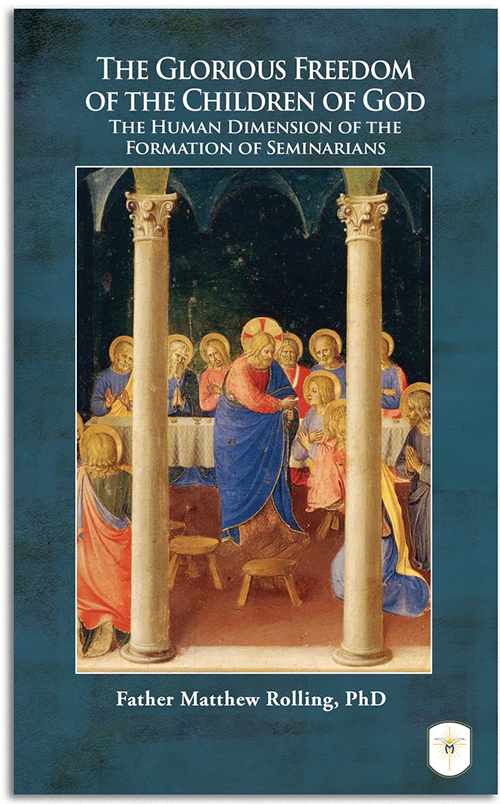
I put something together and sent it off to a few people who I thought would have some good ideas about what to do with it, or would simply know that this was common knowledge and let me know that I did not have to do anything more about this. In the process of sharing with others the ideas I had jotted down, the editorial board of the publishing house for the Institute for Priestly Formation said it would be interested in publishing it as a book. One year later, I submitted the draft of what is now “The Glorious Freedom of the Children of God.”
This book focuses on one of the four major dimensions or aspects of priestly formation, namely, the human dimension. The other three include the spiritual, intellectual, and pastoral dimensions. Given that being human and helping others be human seemed so obvious, I almost thought such a book might be unnecessary. As I began to learn through reading, and through conversations with others who had spent much time in seminary formation work, I discovered the human dimension of formation is actually something that the Church has only began to consider in an explicit and intentional way within the last 30 years. The change is due in large part to Pope St. John Paul II’s document on priestly formation, entitled Pastores Dabo Vobis. In that text from 1992, the pope first delineated those four dimensions of formation which I listed above—and which are now so familiar to those of us in seminary formation. Prior to this document, those distinctions were simply not made in any clear way.
When it comes to spiritual, intellectual, and pastoral, the Church has lots of writings and explanations on what these areas of formation look like. On the other hand, the human dimension had not previously been highlighted in any significant and developed way. As I began to discover, we may all be human and therefore necessarily living a human life. Living the fullness of our humanity, however, is an entirely different matter, and one which not many have attempted to explain. The current Program of Priestly Formation, released by the U.S. Bishops in 2022, repeated the words of Pope St. John Paul II regarding the “…basic principle of human formation…: the human personality of the priest is to be a bridge and not an obstacle for others in their meeting with Jesus Christ, the Redeemer of the human race.” As a result, the Church has spent the last 30 years, attempting to give language and clarity to that human dimension for the sake of her future pastors, as well as those entrusted to their care. This text is aimed at being a contribution to laying out a more complete framework of that conversation.
The text draws upon the Church’s time-tested tradition about the human person and about human development within the context of families and communities. It also incorporates sound insights from contemporary philosophy and psychology to give a deeper and richer understanding of the human person, human behavior, and how to bring about change in our lives. As the title suggests, it is mainly directed at the formation of seminarians, but the contents certainly are applicable to formation for any vocation in the Church. While it does not go into great detail, it at least outlines an understanding of how children are formed in the family, what is helpful for that formation, and ways to supply when our weakness and imperfections keep us from informing the next generation of human beings. It is also written in such a way as to point out lots of resources in each area treated. Much more could be said on so many of the topics only briefly considered in the book. We will have to see what God wants next; maybe I will end up having to write another book!