

By S.L. Hansen
for the Register
Newly elected popes frequently choose their papal name to signify what sort of leader they intend to be. The name “Leo” is Latin for “lion,” but among the 13 men who took the name Leo prior to Pope Leo XIV, not all exhibited such valiant leadership.
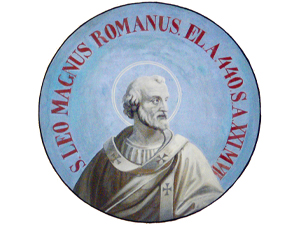
Pope Saint Leo the Great, 45th pope (440-461): Using diplomacy, Pope Leo I convinced Attila the Hun not to invade Rome, helped along by visions of Saints Peter and Paul that convinced the marauder to turn away. Leo I also wrote the Tome to explain Christ’s two natures, fully human and fully divine, which was later used by the Council of Chalcedon to define the doctrine of Christ’s hypostatic union.
Pope Saint Leo II, 80th pope (682-683): Serving for just under a year, this Sicilian-born pope affirmed that Christ has both a human will and a Divine Will by supporting the acts of Sixth Ecumenical Council.
Pope Saint Leo III, 96th pope (795-816): He used gifts sent to him to support many charities. After attackers attempted to leave him blind and mute, he was miraculously healed. He successfully had the attackers’ death sentences commuted to exile, and later crowned Charlemagne the first sovereign of the Holy Roman Empire.
Pope Saint Leo IV, 103rd pope (847-855): To protect Vatican City from future invasions by Turks, Leo IV had its surrounding walls repaired and fortified, which included adding walls to completely enclose Vatican Hill. He also saw to it that other cities in the area were protected.
Pope Leo V, 118th pope (903): Elected during tumultuous times, Leo V is estimated to have served only in the month of August 903 before he was imprisoned by an antipope named Christopher. Leo V either died of natural causes or was executed while in prison.
Pope Leo VI, 123rd pope (928): Serving around seven months, little is known of Leo VI. He issued a papal bull that ordered all bishops of Dalmatia (in present-day Croatia) to obey him and instructed Bishop Gregory to be content with serving the Diocese of Shkodër (in present-day Albania).
Pope Leo VII, 126th pope (936-939): A Benedictine monk, Leo VII was elected pope when there was a great deal of strife between Prince Alberic of the Romans and Hugo, King of Italy. Leo VII summoned the abbot of Cluny to help make peace between the two. That accomplished, Leo VII focused on cooperating with the ongoing reform that was happening in Germany.
Pope Leo VIII, 131st pope (963-64): After Pope John XII was illegally deposed, Leo — a lay law clerk — was made pope by Emperor Otho I. Not long after being consecrated, Leo VIII was expelled by local Roman citizens who restored John XII. When John XII died a short time later, Leo VIII returned and was considered true pope for a handful of months until his own death.
Pope Leo IX, 152nd pope (1049-1054): Initially feeling unworthy of the papacy, Leo IX accepted the honor with a goal of reforming several serious issues in the Church, including simony, clerical indiscretion, and financial mismanagement. Meanwhile, the patriarch of Constantinople was refusing to accept papal primacy. In 1054, Leo IX sent two cardinals with letters pleading for reconciliation, but he died in April before any resolution. The following July, the Great Schism separated the Eastern Orthodox Church from the Catholic Church.
Pope Leo X, 217th pope (1513-21): When he was only 13, Leo X’s wealthy father pressured Pope Innocent VIII to make the boy a cardinal. Leo X was only 32 when he was elected pope, and many politicians expected him to be easily swayed. He neglected to address serious problems in the Church, choosing instead to indulge in concerts, theatrical performances, and banquets. In 1517, the Protestant movement began, using corruption in the Church as an excuse to defy its authority.
Pope Leo XI, 232nd pope (1605): Elected at the age of 70, Leo XI only served 27 days, having become ill immediately after his coronation. Pressured to elevate several of his own grandnephews to cardinals, he firmly refused to succumb to nepotism.
Pope Leo XII, 252nd pope (1823-1829): Leo XII strove to purify the offices of the Curia and lead the Church into spiritual reawakening. He restored sacred music at Mass, managed the end of Catholic persecution in the Netherlands and British Isles, condemned freemasonry and other secret societies, and encouraged scholarship, but was widely thought to be an ineffective leader.
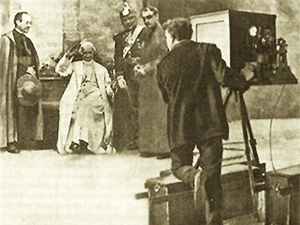
Pope Leo XIII, 256th pope (1878-1903): After commendable ministry in various roles appointed by Pope Gregory XVI and Pope Pius IX, Leo XIII sought positive relationships with France, Russia, the United States, and other nations. The first pope to be filmed, he is remembered for promoting devotion to the Sacred Heart of Jesus and for supporting workers’ rights, including fair pay and safe working conditions. In response to a terrifying vision of Satanic attacks against the Church, he wrote the prayer to Saint Michael.
