

Q&A with Dr. Bob Schuchts
The John Paul II Healing Center in Tallahassee, Fla. is bringing its “Healing the Whole Person” conference, including a “Day of Equipping,” to the Catholic Diocese of Lincoln. The two events will be held April 16-18, 2026, at North American Martyrs Church in Lincoln. Registration for both events will open Jan. 12, 2026.
Speakers at the conference will include Dr. Bob Schuchts, Sr. Miriam James Heidland and Bart Schuchts. Dr. Bob Schuchts founded the John Paul II Healing Center. He has written books and travels the country speaking on healing. Dennis Kellogg, director of communications for the Diocese of Lincoln, recently interviewed Dr. Schuchts to learn more about his healing ministry, misconceptions about healing and what everyone can expect at the upcoming conference. What follows is an edited transcript of that conversation.
Dennis Kellogg, Southern Nebraska Register: How do you define healing from a Catholic perspective?
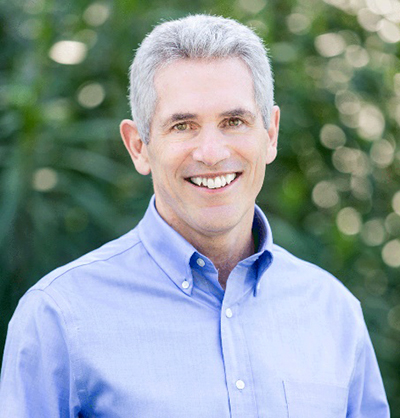
Dr. Bob Schuchts, author, speaker and founder/president of the John Paul II Healing Center: Catholic and its literal meaning means according to the whole. We usually talk about it in terms of universal, but it’s the whole church. And so, healing, from a Catholic perspective, is looking at the whole person, the whole family, the whole universe, actually…. Jesus came to heal all of that, to restore all of that. And we like to use this definition, and it was inspired by Pope Benedict XVI.... healing is an ongoing encounter with God’s love and truth that brings us into wholeness and communion. And so there’s two aspects. There’s our personal integration and wholeness, and then there’s the communion with God and with others, and both of those go together. So, it’s his love and truth that bring us into that wholeness and communion.
SNR: We see so many examples of Jesus healing in the Gospels. One, from Luke 6:19, “Everyone in the crowd sought to touch him because power came forth from him and healed them all.” How do you use the Gospels to kind of help shape your own view of Christ’s suffering, but then also our healing?
Dr. Schuchts: The Gospels were very influential in terms of my awakening to his healing. And you know, he’s not just healing physically, but he’s healing spiritually and psychologically and emotionally at the same time. And so, his whole mission, as Pope Benedict says, was a mission of healing. That even his crucifixion and resurrection is to restore us and bring us into the fullness of that healing in heaven.
SNR: In your book, “Be Healed,” one of the things you write about is the wounds of our hearts. Can you tell us some of the more common wounds that people carry, even if they don’t realize they’re carrying them?
Dr. Schuchts: Sometimes we don’t have the language for it, and having the language and understanding it really is helpful to be able to identify it. Most of us can acknowledge the experience of feeling rejected—not received, not wanted, not accepted, not good enough. That would be one. Another would be abandonment. We think of abandonment as just being somebody leaving us and us being left alone, and that’s certainly a part of abandonment. But abandonment is also not being seen and known and understood. So, there’s kind of an inward experience of abandonment.
I think most of us understand what it’s like to feel shame, and not just the shame of ‘I’ve done something wrong,’ but the shame of ‘I’m defective,’ and ‘I’m not lovable as I am.’ Whether it is ‘I’m bad, I’m dirty, I’m stupid, I’m ugly,’ those are all examples of shame wounds. Then there are wounds of broken trust, which we call fear wounds. It can be from betrayal, or it can be from trauma, but we then pull back and hesitate from trusting others, and we’re going to self-protection. Also, powerlessness and hopelessness and confusion are the other wounds that we talk about and (need to be) be healed.
SNR: And so, once we expose these wounds, once we know they’re there, how do we go about healing them? And in particular, how is Christian healing different than therapy or self-help approaches?
Dr. Schuchts: This was a big part of my discovery after I’d been a therapist, and then I went into therapy, and then I had an experience on a retreat weekend at a parish weekend, and it was a powerful encounter with Jesus that brought more healing than anything that had happened psychologically. And the psychological healing, the therapy, was helpful to prepare my heart, but it was something considerably different.
And so what I realized from that is it really changed the way that I operated as a therapist and taught, which was to recognize that it was the Holy Spirit that brings us into union with Jesus and the Father, and it’s that communion that brings healing, and Jesus is also the only one capable of really loving us fully and revealing truth to us. And so it’s bringing those areas of our life where we may be aware of them, or we may not be aware of them, and the Holy Spirit showing us what needs to be healed, those areas of our heart, because the Catechism says we don’t even know our own hearts. The Holy Spirit has to reveal our hearts, and as those areas are revealed, we begin to pay attention to not only the wounds, but the ways we’ve internalized the effects of those wounds, like “I’m alone, or I’m not loved, or I’m not lovable,” and it’s only Jesus who can meet us there.
It’s like other human beings don’t have the capacity to heal at the level that he does, and so it’s through the Holy Spirit, experiencing that encounter with him that brings healing. And in fact, you know, the Catechism uses that quote that you had from the Gospel of Luke. It’s the sacraments are meant to be encounters with Jesus of powers coming forth from his body. But prayer, also. In prayer, we can also make contact, make communion with him.
SNR: You mentioned the sacraments. What role do the sacraments, in particular, reconciliation and the Eucharist, play in healing?
Dr. Schuchts: The Catechism talks about the Eucharist being the primary healing because it’s a direct encounter with Jesus and then reconciliation is called a sacrament of healing, because it’s sin that creates the fragmentation, and so as we bring our sin and the effects of those sins into confession, there’s a healing. There’s a healing of our shame, but there’s also a healing of the freedom from the guilt and the self condemnation that we usually experience with sin.
SNR: Can you talk about the difference between physical healing and spiritual healing? And are those two often related?
Dr. Schuchts: Yes, they can often be related. You see in the Gospels, Jesus is often doing both at the same time. Jesus forgives sins and then he heals, tells the cripple to get up and walk. He goes to the tax collector and brings him back into community and forgives him. And the woman who was caught in adultery, he heals her by forgiving her and freeing her. So those two things are all the way through the Gospels and in our own lives, a lot of times, physical healing can also require and bring about a psychological or spiritual healing.
So, for example, we’re finding out a lot of our physical diseases originate as psychological and spiritual ailments. Like unforgiveness can become cancer. And we found that in a lot of research, areas of our life where we’re living under a lot of shame can create vulnerability to our bodies to kind of take on different illnesses. Our immune systems are suppressed. The Catechism says that our bodies and souls are indistinguishable in some ways, and they’re very closely interconnected. So, what happens to our soul happens to our body, what happens to our body happens to our soul, and so Jesus wants to heal both body and soul.
SNR: Already, you’ve talked a lot about forgiveness, and that’s a big theme I know in your work. How does forgiveness both receiving it and extending it unlock healing in our own lives?
Dr. Schuchts: Again, I go back to the Catechism. I love this quote. He says, God’s love is indivisible and we can’t hold on to unforgiveness and receive His healing love. It’s like our hearts become barricaded by our unforgiveness, and so when we receive forgiveness, we open our hearts to receive, but when we offer forgiveness, we also open our hearts to give and receive love, and those two things go hand in hand. That forgiveness as the healing of our hearts takes place through forgiveness, then we’re able to love more fully, and we’re able to be loved, receive love, more fully,
SNR: Through your books, through your work, through your conferences, you have impacted so many people’s lives by talking about and sharing your knowledge of healing. Over the years, what’s surprised you most about people’s healing journeys?
Dr. Schuchts: Wow, that’s really a good question. There’s so many stories, but a man in my book “Real Suffering”... I call him “Patrick” and he just came to a conference, and we began a group healing prayer. He had been depressed for 50 years, severely depressed, out of work, not able to function. And Jesus met him at a point when he was 12 years old, where he experienced a significant abuse by his dad. Jesus just came to him and met him in that memory, and really brought him to a place of being able to forgive his dad and to receive Jesus’s love there.
And he was a changed man after that, and was freed of his 50 years of depression, which is a miracle in itself. But on top of that, his dad heard about that and asked him to pray with him, because... Patrick started a healing ministry with his parish, and as he went and prayed with his dad, his dad was brought back to the same memory by Jesus. Patrick didn’t say a thing about it, and his dad was shown the same exact memory where he was abusing his son. He couldn’t forgive himself, and Jesus came to him in the same way that he came and showed Patrick and was able to forgive himself. And then went back to his childhood, to a similar experience where he forgave his dad. So, you see these layers of generational healing that took place.
And again, only God can do that. Patrick had been working hard for all those years and getting all kinds of medical assistance, psychological assistance, but it’s like Jesus went right to it. And then, not only for him, but his dad. He was brought into greater wholeness, but also brought into communion. And so, I just love that story, because it’s so complete and so validating of the healing process.
SNR: You work with priests, religious and laity. Do you find when you work with those distinct groups, you find wounds that are in common to all of them, or does each group have its own unique set of wounds?
Dr. Schuchts: I think both. I think all of us have the seven deadly wounds. All of us have patterns of sin. But, I think there’s also unique wounds in the state of life and the vocation of life. And so, for example, bishops and priests carry a heavy burden of what’s happened in the abuse crisis and in the way that they’re generally looked at by society. That’s very wounding in the heart of a priest or in the heart of a bishop.
For religious, they’re often in such contemplative lives or lives of service that very rarely does anybody come to them and pay attention to where they’re suffering. And so, we find their wounds are wounds of suffering in silence and offering it up. But some of these things are from experiences of early childhood, or even in the communities, where they’ve experienced mistreatment in communities. And so, their healing is unique in that way.
For lay people, it’s usually the state of life. It’s things that have happened in the family and marriage, with children and so in that way, those are unique.
SNR: What do you find are the biggest misconceptions people have about healing, and how do you help them work through those misconceptions?
Dr. Schuchts: A couple of things. One is that people tend to think of healing as a side issue in the Church. And again, Pope Benedict XVI said it’s the central mission of the Church’s apostolic mission. And so, I think that’s one misconception. Second is all of us need healing. A lot of people say, “Well, I don’t need any healing. You know, I went to therapy years ago, or I never had any wounds. My family was great, and I don’t need healing.” And I asked them if they’ve ever sinned, and they said, “Well, yeah, I’ve sinned.” And I said, do you recognize that when we sin, we’re wounded by our sin? “OK.” Secondly, do you think you are affected by original sin? “Yes, I’m affected by original sin.” Do you think you’ve ever been affected by the sins of anybody in your life from the time you were a baby until now? “Yes.” ...I said, can you see from that, we all need healing? Some of us need more of it than others, but none of us are going to be completely healed until heaven. But on this earth, our entire life is a process of healing and restoration and reconciliation.
SNR: How has your own personal journey of healing helped to shape the work that you do at the John Paul II Healing Center?
Dr. Schuchts: Quite a bit. As I mentioned going to that retreat, I had childhood wounds that I hadn’t paid attention to. I just went on with my life, and it was only when those came to the surface in my late 20s, in my marriage and family life, and going to therapy was very helpful, but the encounter with Jesus and experience of God’s love and that just shifted my whole way of operating, which eventually led to incorporating it in my work and then offering conferences, and that evolved into the John Paul II Healing Center.
SNR: I know a lot of people in Nebraska and the Lincoln area are really excited about the “Healing the Whole Person” conference coming up April 16th to the 18th in 2026. If somebody’s considering attending, what can they expect?
Dr. Schuchts: One of the things is just the freedom to be yourself. There’s no pressure to do what anybody asks you to do or do anything else. There’s a combination of teaching, and it’s me and Sr. Miriam and my brother Bart. And then after the teaching, we’ll have a time of reflection each session. And then after that, we’ll have a group prayer experience where… it’s very individual for each person, but we’re facilitating the prayer in the whole group. Part of those prayer experiences will be adoration, and Sr. Miriam will lead in a guided reflection.
Then another part of the prayer experience will be really looking at these areas of wounds in our own life and having an opportunity to do renouncing prayer for the areas where we’ve lived in false beliefs about ourselves. Another prayer experience will be just an encounter with God’s love. And there’s several prayer experiences through it, but they’re all very dynamic and integrated with the teaching.
So, people can expect, one, the freedom to just sit and watch, or the opportunity to really receive a lot of healing through the entire weekend. Priests and participants tell me they have the best confessions they’ve ever heard and they’ve ever had, because all these things are being opened up at a certain level that people have an awareness and are able to go really deep. And so, the priests say, ‘I love coming to the conferences and hearing confessions because they’re the most beautiful confessions I ever hear.’ And penitents say the same thing – ‘I just feel so liberated by this confession.’
SNR: Why do you think this program has resonated so strongly in dioceses and parishes across the entire country?
Dr. Schuchts: I think it’s because of the Lord’s work. I think this is what he desires to do right now in the Church. Particularly coming out of Covid, we became really aware, there’s been the need all along, but we became particularly aware of our need for healing. And so, people are coming so open now. I think it’s the movement of the Holy Spirit in the Church in this hour, and we’re seeing it, not just in this country, but all over the world. There’s just such a hunger for encounter with Jesus and for healing and for the areas in which we’ve carried for so long, for there to be restoration and life and freedom and joy restored.
SNR: What do you think is the greatest need for healing in our Church today?
Dr. Schuchts: That’s tough. I think the most obvious one is the healing of the wounds from the sexual abuse crisis at a corporate level, but I see that happening. I think maybe the greatest healing that’s needed is the recognition that each one of us needs to have our hearts freed up to love. We walk into an average parish, and if we know people and we’ve been there a while, we may experience love, but I think the average parish, a stranger walks in, he doesn’t know and experience the love of God in that community. I think it’s because all of us are caring so much that we’ve kind of lived in isolation, and what we need is the restoration of that kind of communal love that will affect and bless everybody in the Church. I think that’s maybe the greatest healing we need.
SNR: Dr. Schuchts, what is the one message about healing you’d like to leave with our audience today? In particular, if there’s somebody out there who’s thinking to themselves, “I’m too far gone. I can’t be healed at this point.”
Dr. Schuchts: For that person, I have witnessed miracles of healing. I’ve seen so many people receive so much, and healing is ongoing. So, it’s not like everything happens in a conference, but I remember one young man who had seven diagnoses and he couldn’t go to college because he was homebound by all these diagnoses and medications. And in a conference, in receiving prayer, he was able to resume his life, go back to school.
There’s not a person who’s so wounded that you can’t receive healing. In fact, God’s heart is for those who are crushed in spirit, for those who are brokenhearted, and he is especially attuned to people who are in great need, like this young man that I talk about, and women who’ve been sexually abused and been in trafficking, and you just see their healing. Where people have gone through an abortion, you just see their healing. The only thing you can do is praise Jesus.
The “Healing the Whole Person” conference will be held April 16-18, 2026, at North American Martyrs Church in Lincoln. Online registration opens Jan. 12, 2026 at 9 a.m. CT.
A separate but complementary event, a “Day of Equipping,” will be held April 17, 2026, and requires a separate registration. Registration for this event also opens Jan. 12, 2026, at 9 a.m. CT. For more information on both events, visit jpiihealingcenter.org.
To listen to the full interview with Dr. Bob Schuchts, go to the Catholic Diocese of Lincoln YouTube channel .
