

By Andrew Winter
The ‘Golden-Mouthed’ preacher
1. Although he was destined to become bishop of Constantinople, John Chrysostom (which means “Golden-Mouthed”) was born in Antioch, c. 347. His father, a commander of the imperial army, died when he was very young, but his mother made sure that he received an excellent education.
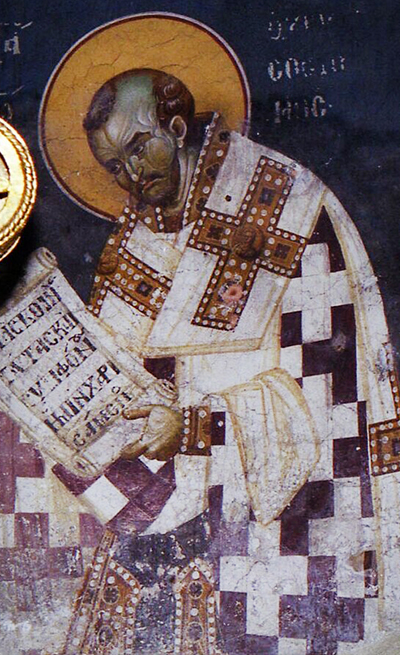
2. As a young man, he went to the hills south of Antioch to join a community of austere monks. Eventually he sought more perfect solitude as a hermit for two years. This hard life permanently damaged his health, and he was forced to return to Antioch. He was ordained a priest and served as assistant to the bishop of Antioch for 12 years.
3. The emperor of the Eastern Roman Empire appointed John to the See of Constantinople in 398. Many others wanted control of this important diocese, and the emperor was afraid that John would refuse the honor out of humility, but he lured him to Constantinople, and Theophilus of Alexandria ordained him in private.
4. Thanks to his thorough education, John proved to be an astounding preacher, and turned many hearts to Christ thanks to his compelling words (hence the name “Golden-Mouthed”). He also showed concern for the poor and the ill, building hospitals in Constantinople.
5. John was very critical of the luxuries of court life and the worldly ambition so prevalent in imperial circles. He gave a homily warning women against vanity, using the example of the evil queen Jezebel from the Bible. Some interpreted this as an attack on the empress Eudoxia, who became very angry with John, for she was a vain woman.
6. Eudoxia conspired with Theophilus, the bishop who had ordained John, to have him exiled in 403. But immediately after he left, an earthquake shook the city. In superstitious fear, Eudoxia recalled John and denied having anything to do with the exile.
7.But when a statue of Empress Eudoxia was erected outside the Hagia Sophia, it was accompanied by excessive and rowdy games which John condemned. In anger, Eudoxia banished John again, and this time he never came back.
8. Pope Innocent I demanded the reinstatement of the holy bishop, but his messengers to Constantinople faced imprisonment. Innocent tried to open a council in the city, but Theophilus would not allow it.
9. Fearing his return, Theophilus sent John even farther into exile, to Pityus, almost 1,000 miles from Constantinople. The aged John did not make it even halfway before the extreme heat and cruelty of his guards killed him. He died Sept. 14, 407. He is the patron saint of preachers and the city of Constantinople (modern Istanbul). Although saints’ feast days are usually celebrated on the anniversary of their death, John’s was moved to Sept. 13 because Sept. 14 is the feast of the Exaltation of the Holy Cross.
