

By Bishop James Conley
May is mental health awareness month, and we are reminded that nearly 60 million Americans live with mental health struggles—myself included. Too many of that staggering number will not seek treatment, some because they can’t afford it or don’t have access to the resources they need, but others because of the stigma that still surrounds mental illness.
As you know, I’ve shared openly my own struggles with my mental health in the hopes of reducing that stigma, and I am so grateful for the opportunities the Lord has provided to raise awareness about, and hopefully compassion for, this terrible epidemic.
This month also marks the one-year anniversary of “A Future with Hope,” my pastoral letter in which I wrote about my struggles with mental health. Thankfully, I am in a much better place than when I took a leave of absence in 2019 and 2020, but that doesn’t mean I have everything figured out. In fact, I recently experienced a rough patch wherein anxiety and depression resurfaced. Thanks be to God, I am coming out of it, with the help of my therapist, friends, prayer, and a return to a light dose of medications. Interestingly, I experienced a huge lift on the feast of the Annunciation March 25, when I renewed my total consecration to Mary.
And so I have been reminded of the delicate interplay between our spiritual and psychological/emotional lives. While we can’t pray ourselves out of mental health struggles, it is essential that we hold onto our prayer and cling to the sacraments when we are going through a mental health challenge. Holiness and wholeness have their own domains, but they beautifully complement each other, since they both ultimately come from God. I have come to realize that there is a thin partition between the spiritual and the psychological/emotional.
If you haven’t had a chance to read my pastoral letter, I would encourage you to read it. It includes a whole section of recommended resources to aid you in your healing journey. Meanwhile, I’ve been getting back to the basics to improve my mental health, since we need to be intentional about them in this stressful and distracting world in which we live.
Prayer, of course, remains my number-one priority—it needs to be non-negotiable, most especially when it’s hard. I have also found that getting outside into nature is absolutely critical. I have committed myself to two outside walks a day, even if all I have time for is a walk around the block. The fresh air, the beauty of nature, the sun, the wind and the sky all play a part in improving our mood and mental health. An early morning walk as soon as the sun comes up can be very healthy. I listened to a podcast recently that explained how UV rays can suppress melatonin, which allows you shake off your sleepiness, and stimulate serotonin and dopamine, which has the effect of lifting your mood.
The podcaster recommended “sun before screens” in the morning. In other words, before you scroll through your phone or get on the computer, go for a walk outside to start your day. Even if it’s just a walk around the block, there’s something about experiencing nature and being attentive to the beauty around us that is healing for the soul. The past winter made it hard with all the cold weather and storms. I’m grateful for my dog Stella, who gets me outside even when I don’t feel like it.
A focus on good sleep and healthy eating—which includes drinking enough water—is also a key pillar in supporting mental health. Lastly, I find that enjoying the creative works of others is soothing for my soul. Listening to music always lifts me up, and it’s amazing what a good novel or a beautiful poem can do when life feels heavy. Of course, I don’t stick to the basics perfectly, but I try to remind myself not to let the perfect become the enemy of the good. There are days when I manage only a few of the basics, and that’s OK, so long as that doesn’t become my new normal.
I recently read a book entitled “Last Child in the Woods: Saving Our Children from Nature-Deficit Disorder” by Richard Louv, a bestselling author who inspired an international movement to connect children with nature. This is the first book to bring together a new and growing body of research indicating that direct exposure to nature is essential for healthy childhood development and for the physical and emotional health of children and adults. More than just raising an alarm, Louv offers practical solutions and simple ways to heal the broken bond—and many are right in our own backyard.
Community is also crucial. Everyone is fighting a great battle in this world and is struggling with something, even if that fight isn’t always obvious, so we need to provide community for others while also receiving it from them. No one should ever have to struggle alone, and I know how much pain this causes for those who feel detached and isolated. Thankfully we can all take steps to build community by being vulnerable in healthy ways.
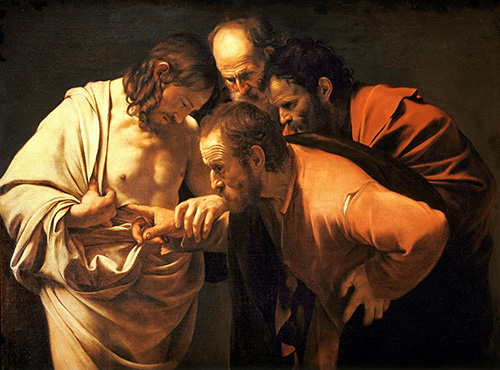 I’m reminded of this when I meditate on Caravaggio’s painting of doubting Thomas that I have in my chapel. The way the artist has depicted the scene, it’s almost like our Lord is forcing Thomas’ hand into his side. It appears that although Thomas was curious to know if the Lord had truly risen, he hesitates to touch the Lord’s wounds. Looking at this image reminds me that Jesus wants me to be vulnerable, and that he’ll help when I’m reticent or afraid – “in his wounds we are healed (Is 53:5).”
The painting also speaks to the amazing things that can happen when we’re vulnerable, because when Thomas touches Jesus’ wounds, he knows and proclaims Jesus as Lord and God. I’ve been humbled by those who have read my pastoral letter, both in this country and abroad, and have reached out to me. This was only because the people around me encouraged me to be open and vulnerable about my struggles. There is very often an outpouring of support when we’re willing to be vulnerable and let people know what’s going on, during which community is often created or strengthened.
What we can be always sure of—no matter what is happening in our lives—is that we are not alone. You are not alone! God knows your suffering intimately and wants to walk with you through it.
So I’d like to end this column with a prayer: Lord, help us to recognize that you are always with us and to reach out for help when we’re struggling. Send your grace into our hearts, that we might also serve others who are need of your love and healing. Help us all to move toward the holiness and happiness for which you created us.
