

Q. Can Catholics venerate Orthodox saints?
A. The answer is no, but also yes, with some serious caveats. So let’s begin the caveating.
There are many saints that the Catholic Church and the various Eastern Orthodox Churches venerate in common. Just because a saint is recognized amongst the Orthodox as a saint does not disqualify him or her from being venerated by Catholics. So in that way, yes, Catholics can venerate Orthodox saints because they are also Catholic saints. That was the easy caveat.
What about saints who are only recognized as saints amongst the Orthodox? Well, now we are getting into more complicated caveats. An important dividing line in this is 1054 A.D., when the Eastern Schism occurred. But it’s not a hard and fast line, mostly because of our Eastern Catholic brothers and sisters. There are Eastern Orthodox saints who lived and died as members of an Eastern Orthodox Church that are now venerated in Eastern Catholic Churches.
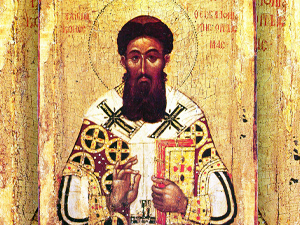
A good example of this is Gregory of Palamas, who lived and died after the Schism, but before a portion of the Greek Orthodox Church reconciled with Rome. He is venerated in the Melkite Catholic Church, despite having lived during a time when he would have not been in full communion with Rome. It is important to note that any canonized saint in the Catholic Church is a saint, regardless of whether the person was Latin or Eastern Catholic. Gregory of Palamas has not been canonized and is therefore not officially a saint, but Melkite Catholics include him in their calendar and offer public veneration of him. So, in this case the answer to the question is yes in this particular circumstance, with possibly the most caveat-y of all caveats in this entire Ask the Register.
An important point in all of this is the distinction between public veneration and private veneration. Public veneration is permitted only after it is given explicit approval by some Church authority. This is the practical effect of beatification (the person is able to be publicly venerated in his or her region or religious community) and canonization (the person is able to be publicly venerated universally throughout the Church). Given that the purpose of venerating saints is “the glory of God and the sanctification of man by conforming one’s life fully to the divine will and by imitating the virtue of those who were preeminent disciples of the Lord” (Directory on Popular Piety and the Liturgy n. 212), it stands to reason that the Church would want to make sure that the person was indeed a preeminent disciple of the Lord and therefore reserves to Herself the authority to permit public veneration of a person until this can be determined.
Even going back to the days of popular acclaim being the way people became considered saints, there was an element of official approval by the Church. The bishop of the place in which the saint died would notify neighboring bishops that this person did indeed live a life in conformity to Christ. By the eleventh century, it was decided that local councils should investigate the sanctity of a person’s life before they could be publicly venerated. In 1634, Pope Urban VIII decreed that only the pope could beatify and canonize a saint, which remains the law of the Church to this day.
Circling back to the original question, public veneration of a non-canonized person, or a person who has not been approved by some form of Church authority is not permitted. Privately venerating someone by asking for his or her intercession and being inspired by the person’s life and virtue is permitted for anyone who did not lead a life contrary to the Catholic Faith. This could be for someone who was Orthodox but never spoke against the Catholic Church or even a family member who lived a saintly life.
This question was answered by Father Caleb La Rue, chancellor of the Diocese of Lincoln. Write to Ask the Register using our online form, or write to 3700 Sheridan Blvd., Suite 10, Lincoln NE 68506-6100. All questions are subject to editing. Editors decide which questions to publish. Personal questions cannot be answered. People with such questions are urged to take them to their nearest Catholic priest.
