

Q. What is a consistory?
A. After 2,000 years of existing, the Church has developed all sorts of process and practices. Most of these developed organically and reflect the human dimension of the Church in that they are practical, often times bureaucratic, processes that are part and parcel with running a global Church. A consistory of cardinals is a good example of this.
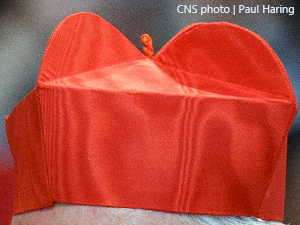 It is important to remember Jesus did not appoint cardinals. Cardinals don’t appear in the Acts of the Apostles or any of the epistles of the New Testament. Cardinal is not a grade of the Sacrament of Holy Orders. I don’t mean to diminish the role of cardinal, only to express that cardinals are 100 percent an invention of the Church and fall heavily into the practical/bureaucratic category of the Church.
Cardinals can be honorary titles, but really, the role of the cardinals is to provide for the election of the Roman pontiff and to “assist the Roman Pontiff either collegially when they are convoked to deal with questions of major importance, or individually when they help the Roman Pontiff through the various offices they perform, especially in the daily care of the universal Church” (CIC c. 349).
The Church is a big operation, and She does not expect the pope to be dealing with her day-to-day governance. The cardinals are analogous to the 70 elders appointed to assist Moses in the Old Testament. This is why Pope Sixtus V originally capped the number of cardinals at 70 in 1586, to directly connect the cardinals to the elders, and to signal that they serve the same purpose, namely, assisting in practical governance.
Apart from the running of the various dicasteries of the Apostolic See, cardinals can be called together by the pope in a consistory (from the Latin consistorium meaning council/assembly) for various purposes. Consistories can be ordinary, in that only the cardinals working in Rome are gathered, or extraordinary, in that all of the cardinals throughout the world are gathered.
Consistories, whether ordinary or extraordinary, give the pope the opportunity to hear from the cardinals regarding “questions of major importance.” It is the pope who decides what these questions are and how he wants to hear from the cardinals. The cardinals are not a governing body and do not have authority in and of themselves to decide anything. They are completely advisory. You can think of them as a really fancy parish council for the whole Church.
It can happen (but does not always happen) that, after receiving advice and insight from the cardinals, the pope will issue some new norms for the Church, usually regarding a very particular matter. That is at his discretion and through his authority as the Supreme Authority of the Church.
This question was answered by Father Caleb La Rue, chancellor of the Diocese of Lincoln. Write to Ask the Register using our online form, or write to 3700 Sheridan Blvd., Suite 10, Lincoln NE 68506-6100. All questions are subject to editing. Editors decide which questions to publish. Personal questions cannot be answered. People with such questions are urged to take them to their nearest Catholic priest.
