

By Andrew Winter
1.
Pope St. John Paul II instituted the Luminous Mysteries in 2002 with the apostolic letter Rosarium Virginis Mariae (“The Rosary of the Blessed Virgin”). This letter was a long treatise on the importance of the Rosary in the modern Church, and it culminates with the introduction of the Luminous Mysteries.
2.
The Luminous Mysteries are also called the “Mysteries of Light,” and that is what John Paul II called them in Rosarium Virginis Mariae. They are meant to be “a true doorway to the depths of the Heart of Christ, ocean of joy and of light, of suffering and of glory.” They illumine the period of Christ’s life from his Baptism to the Agony in the Garden.
3.
John Paul II named the year in which he promulgated the Luminous Mysteries the “Year of the Rosary.”
4.
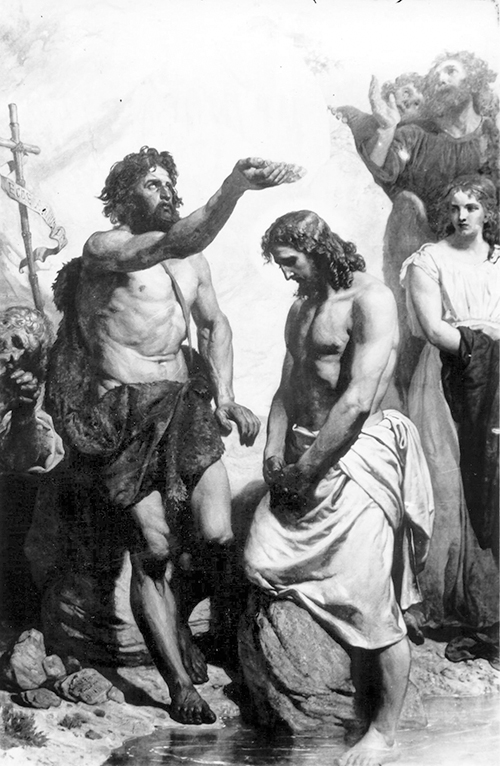
Though “the whole mystery of Christ is a mystery of light,” John Paul II wanted to highlight five specific moments in the period of Christ’s adult life, starting with the Baptism in the Jordan. Here Christ, who is God, is baptized by John, a sinful man, and the Spirit comes down upon Jesus, while the Father’s voice is heard from heaven. The special virtue of this first Luminous Mystery is openness to the Holy Spirit.
5.
The second Luminous Mystery is the Wedding Feast at Cana, when Jesus turned water into wine at Mary’s request. In the Gospels, Mary says to the servants: “Do whatever he tells you,” and John Paul II says this exhortation “is a fitting introduction to the words and signs of Christ’s public ministry and it forms the Marian foundation of all the ‘mysteries of light.’” The special virtue of this mystery is Marian devotion, which leads us to Christ.
6.
The Proclamation of the Kingdom might be called the largest of the mysteries, for it covers almost the entire three years of Jesus’ public ministry. It is a mystery of new life, hope, and the sacrament of Penance. Its special virtue is conversion and evangelization.
7.
John Paul II called the Transfiguration, “The mystery of light par excellence.” It is the only time recorded in the Gospels when Jesus revealed his full glory to his Apostles. The special virtue of this fourth mystery is spiritual courage, which is especially appropriate given the terror of the unveiled Godhead.
8.
The fifth Luminous Mystery is the Institution of the Eucharist, which recalls Christ’s Last Supper, immediately before his death. It was at the Last Supper that Jesus gave His own Body to the Apostles as food. The special virtue of this mystery is love of the Eucharist.
9.
Traditionally, the Mysteries were prayed on specific days, but the Luminous Mysteries forced a change in this tradition. John Paul II wrote that because “Saturday has always had a special Marian flavour,” the Joyful Mysteries, which deal mostly with Mary, should be moved to Saturday and Monday, giving room for the Luminous Mysteries on Thursday. The Glorious Mysteries are now prayed on Sundays and Wednesdays and the Sorrowful Mysteries on Tuesdays and Fridays. But, of course, these traditional days are not absolute rules.
